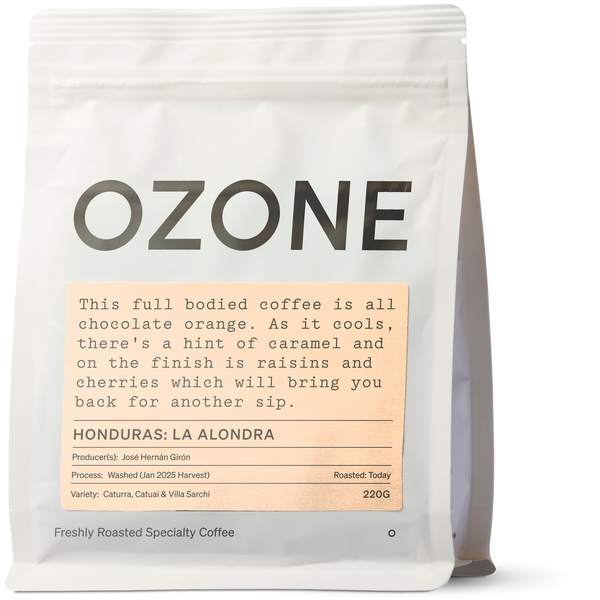
The Girón Family and La Alondra
The Girón family have been growing coffee for over a century – though La Alondra hasn't always been in the same place. The original estate was established in Lempira, Honduras, and passed down through generations before Don Hernán Girón had to sell it in 1998. Rather than walk away from the family's coffee legacy, he bought new land in the mountains of Lepaterique – land that had already been planted with coffee since the 1970s – and gave it the same name. Keeping the name wasn't just sentimental. It was a statement of intent.
Today, Don Hernán's son Miguel runs La Alondra, with his three brothers actively involved. It's very much a family operation: the farm surrounds the family home, the harvests are managed collectively, and the decisions about how to grow and process are made with the next generation in mind. One of those brothers, Alejandro – who pursued an MSc at Manchester Business School – is the reason we're drinking this coffee at all.
How We Found Each Other
During Covid, Alejandro reached out to our green buyer Roland as part of his thesis research into the coffee business. They had a genuinely wide-ranging conversation, and towards the end Roland asked why Alejandro was so interested in the industry specifically. Because my family have a coffee farm in Honduras, came the reply. Obviously, Roland asked to taste it.
Getting samples was one thing. Getting the coffee to the UK was another. That particular puzzle solved itself in the most coffee-world way possible. Roland was in London for lunch with some visiting Honduran producers, one of whom was Benjamín Paz Muñoz – whose family runs Beneficio San Vicente, a dry mill that has helped transform Honduras's specialty coffee scene. They got on immediately. Benjamín had clocked the Mierisch Family coffees on our shelves, and it turned out he and the Mierisch family were already friends. Good omen.
A couple of weeks later, at London Coffee Festival, Roland mentioned to Alejandro that he'd just met this chap called Benjamín. Alejandro's response: "No way – Benjamín is my brother's friend. He's the one who exports our coffee." The circle closed. Roland linked everything up through Langdon Coffee Merchants, and La Alondra's coffee made its way to the UK for the first time. We brought things full circle at Manchester Coffee Festival that year, handing Alejandro the very first roasts of his family's coffee we'd ever made.
Coffee really is all about relationships. The connections and friendships that form across the industry can make remarkable things happen – and this one came together through a thesis interview, a chance lunch, and a shared friend on the other side of the Atlantic.
Benjamín Paz and Beneficio San Vicente
It's worth saying a little more about Benjamín, because his role in this story – and in Honduran specialty coffee more broadly – goes well beyond exporting La Alondra's lots. He grew up working at San Vicente from childhood, learning every part of the process before moving into the specialty programme after university. Since joining full-time in 2009, he's become one of the most respected figures in Central American coffee, known for his work connecting small producers directly with international buyers rather than working through intermediaries – a model that puts more value in the hands of the farmers who earn it. In 2022, he won first place in the Honduran Cup of Excellence with a washed Geisha from his own farm, La Salsa. You can read more about him on his producer page here.
The Farm
La Alondra sits in the municipality of Lepaterique – whose name, in the indigenous Lenca language, means "Hill of the Tiger" – just 30 kilometres from the capital Tegucigalpa, in the mountains of Yerba Buena. It's an 80-hectare property, with around 30 hectares planted to coffee at 1,600–1,800 metres above sea level. The area gets plenty of rainfall (2,000–2,500mm annually) and temperatures range from a cool 10°C to 22°C. That combination of altitude, mist, and slow-ripening conditions is exactly what you want for quality.
Here's the thing: Lepaterique has traditionally been known for cold-weather vegetables, not coffee. La Alondra was something of a pioneer in the region, with the first neighbouring coffee farms only appearing around 2000. That relative isolation made the partnership with San Vicente all the more important – connecting the family to specialty markets that would otherwise have been out of reach.
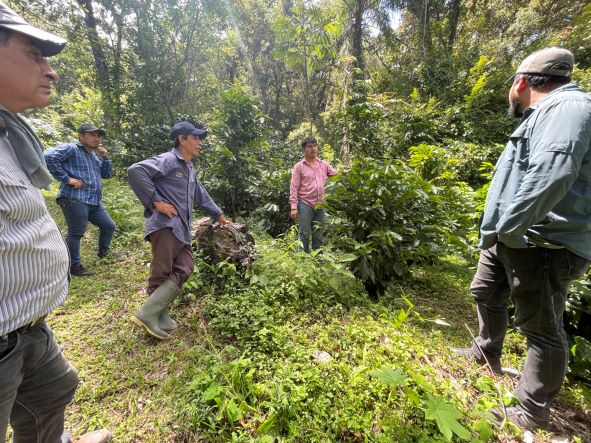
The farm is heavily forested with native trees, including tall conifers on the upper slopes that look out across the valley. The abundant shade – combined with limited labour availability – means many of the coffee plants grow unusually tall. Even the Villa Sarchi, typically a compact dwarf varietal, reaches for the canopy here.
Around half the plants are about 30 years old, with the rest added gradually as part of an ongoing renovation. The main varietals are Villa Sarchi (originally from Costa Rica) and Caturra, with smaller plantings of Bourbon, Catuai, and Maracaturra. Miguel has also planted fruit trees across the property – mango, guava, limes, and plantains – and the farm remains one of the most important sources of employment in the surrounding village.
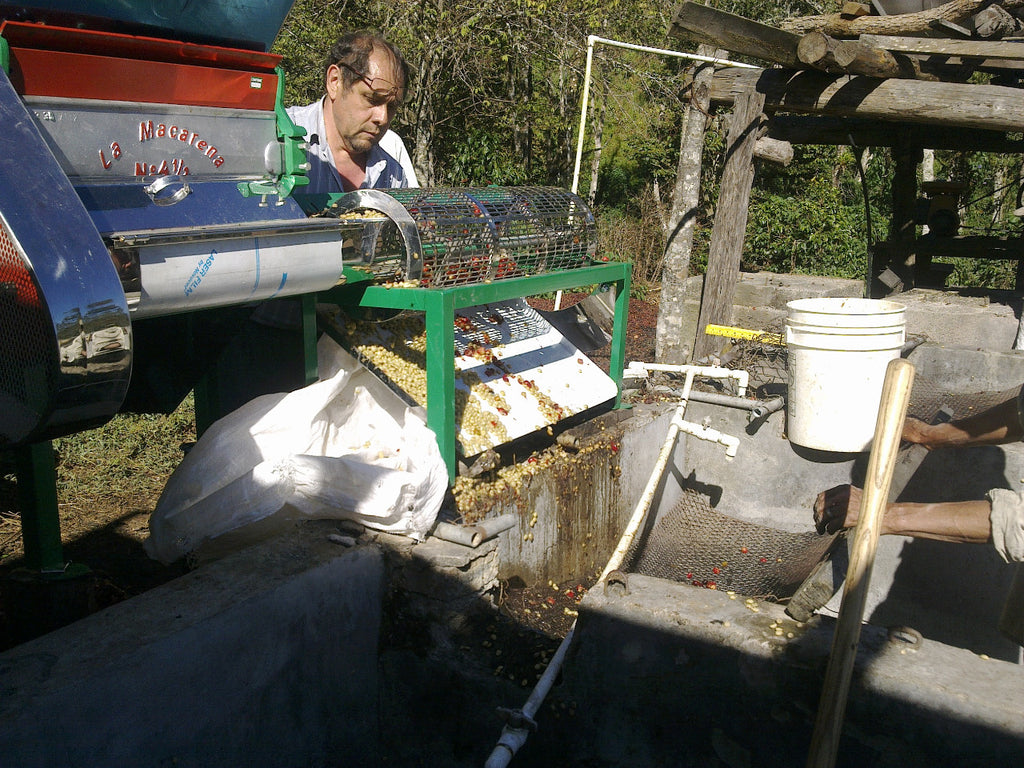
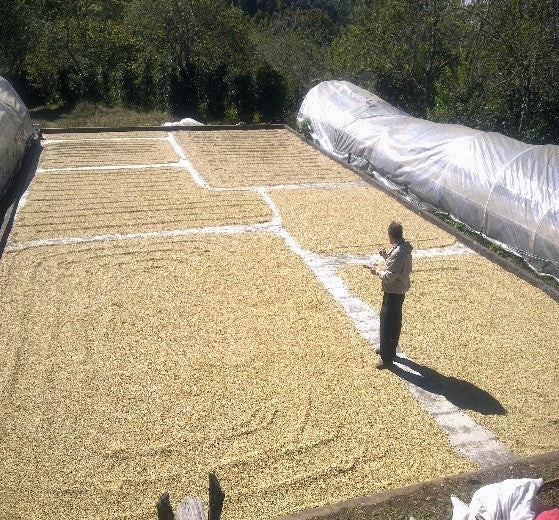
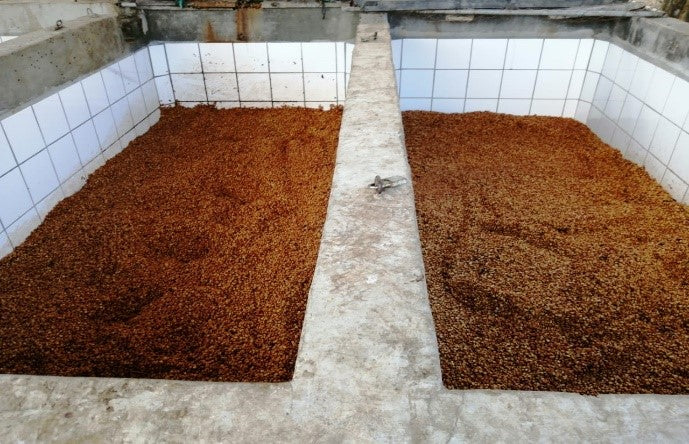
Coffee is processed at a small wet mill above the house, then dried and sent to San Vicente for dry milling and export. It's a process that now has years of trust and friendship behind it – and the coffees show it.
- Country: Honduras
- Department: Francisco Morazán
- Municipality: Lepaterique
- Village: Piedra Rayada
- Producer: José Hernán Girón
- Farm: La Alondra
- Elevation: 1,700 m.a.s.l.