Gloria Rodríguez - A Life in Salvadoran Coffee
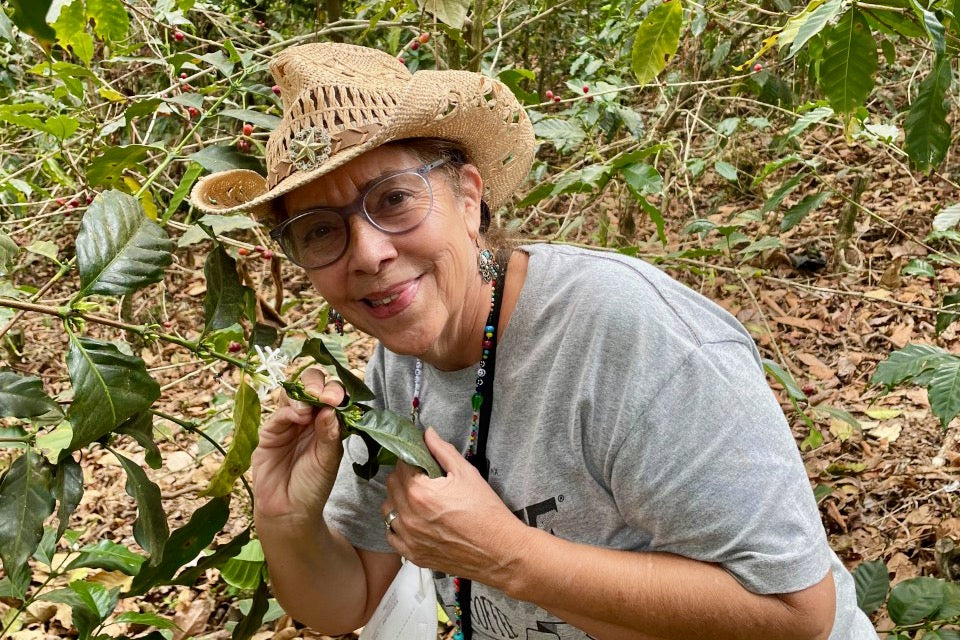
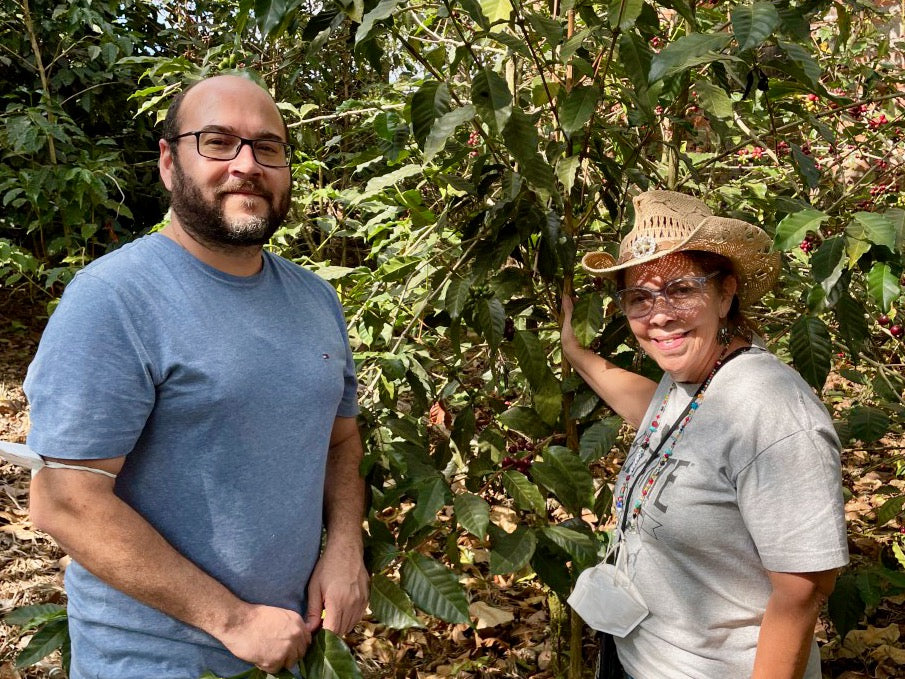
Gloria Rodríguez is a producer many of our customers already know well. A fourth-generation coffee grower from Apaneca, in El Salvador's western department of Ahuachapán, Gloria has spent her life among coffee trees. With the support of her siblings and family team, she now oversees six farms in the Apaneca-Ilamatepec mountain range (San José, Mamatita, El Porvenir, Nejapa, Nueva Granada and La Lagunita) together totalling around 38 hectares.
We've been buying Gloria's coffee since 2009, drawn back year after year by the consistency, clarity and quiet character of her lots, and by the care she brings to every stage of production.
Fourth-generation knowledge
Coffee growing in the Rodríguez family stretches back over two centuries. Gloria's great-grandparents José María and Josefina Rodríguez planted the first coffee trees by hand at Finca San José in 1815, and the land and knowledge passed through successive generations – from grandparents to parents – before coming to Gloria.
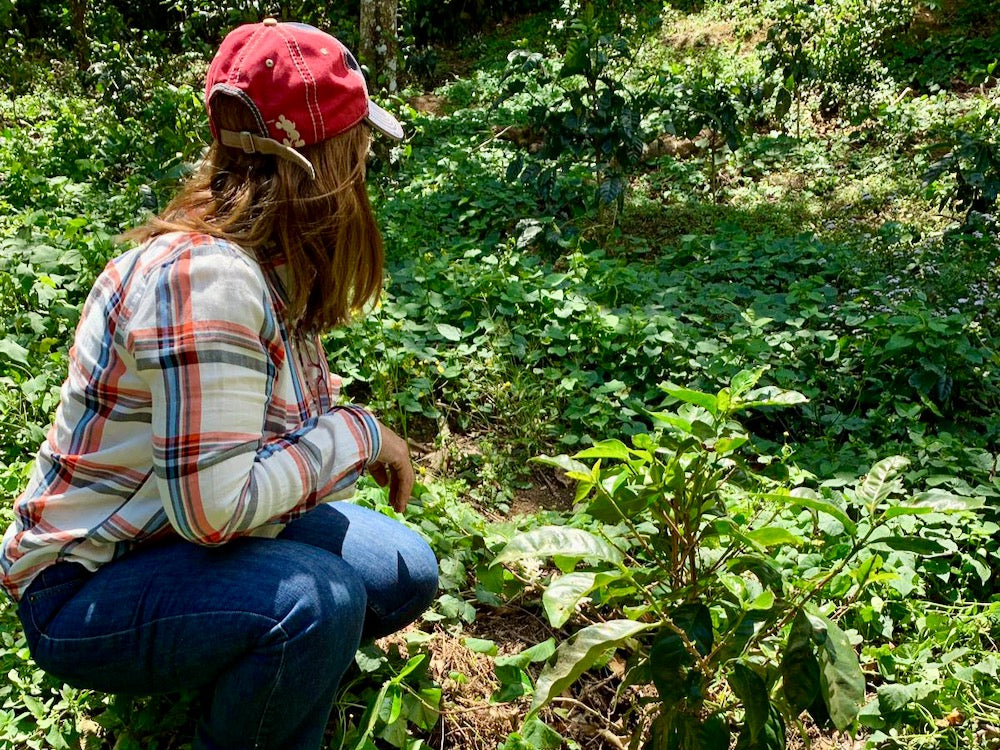
Growing up on the farms, Gloria learned coffee not as a single crop but as a living system: trees, soil, shade, people and time. That generational understanding still underpins the way she works today, balancing respect for tradition with the realities of farming in a changing climate.
Competition recognition
Gloria's farms have achieved remarkable recognition in El Salvador's Cup of Excellence competitions – in fact, she's won an award every year she's entered since 2007.
In 2008, her Finca El Porvenir (meaning "The Future") took top honours. Her Finca Nejapa placed third overall in 2017 with a washed Elefante lot – the highest-ranking washed coffee in the competition's top five. The following year, a honey-processed Elefante blend from Nueva Granada scored 89.23 points and placed seventh.
Most recently in 2023, her son Roberto's fully washed Elefante from Nueva Granada scored 89.54 points for sixth place – ranking as the highest fully washed coffee in that year's competition. A plot named "Roma" at Nejapa – which Gloria named by combining the first two letters of her children's names Roberto and María Jose – became the first Caturra ever to place in El Salvador's Cup of Excellence.
These aren't isolated successes. They reflect the consistency that comes from deep knowledge of place, careful stewardship, and the kind of attention to detail that can only be learned over generations.
The farms
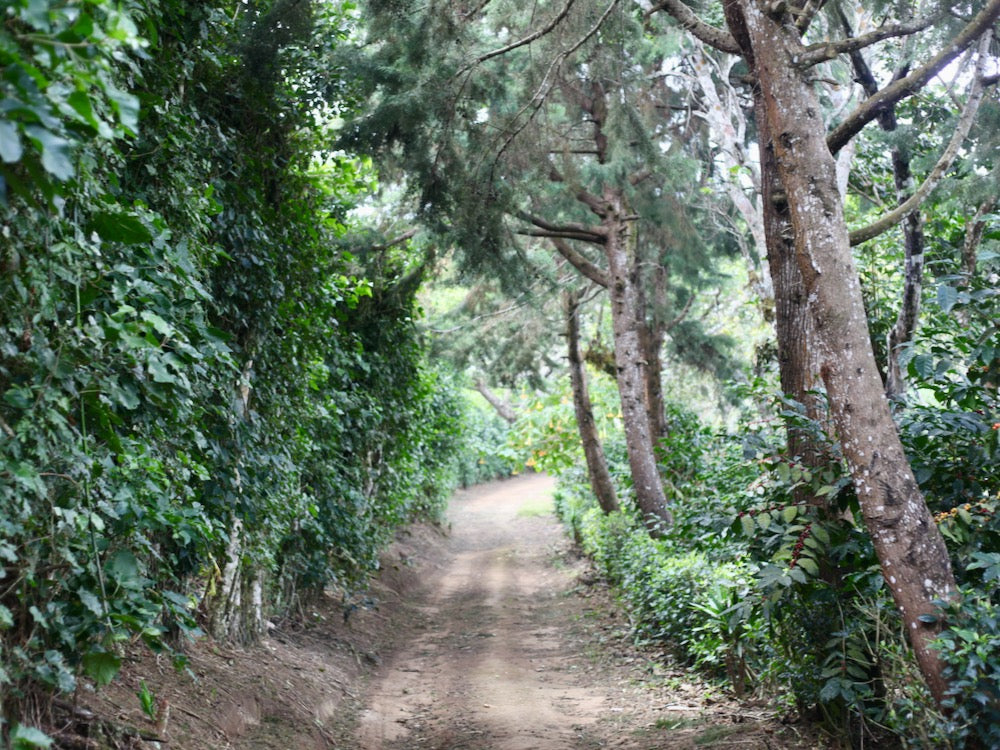
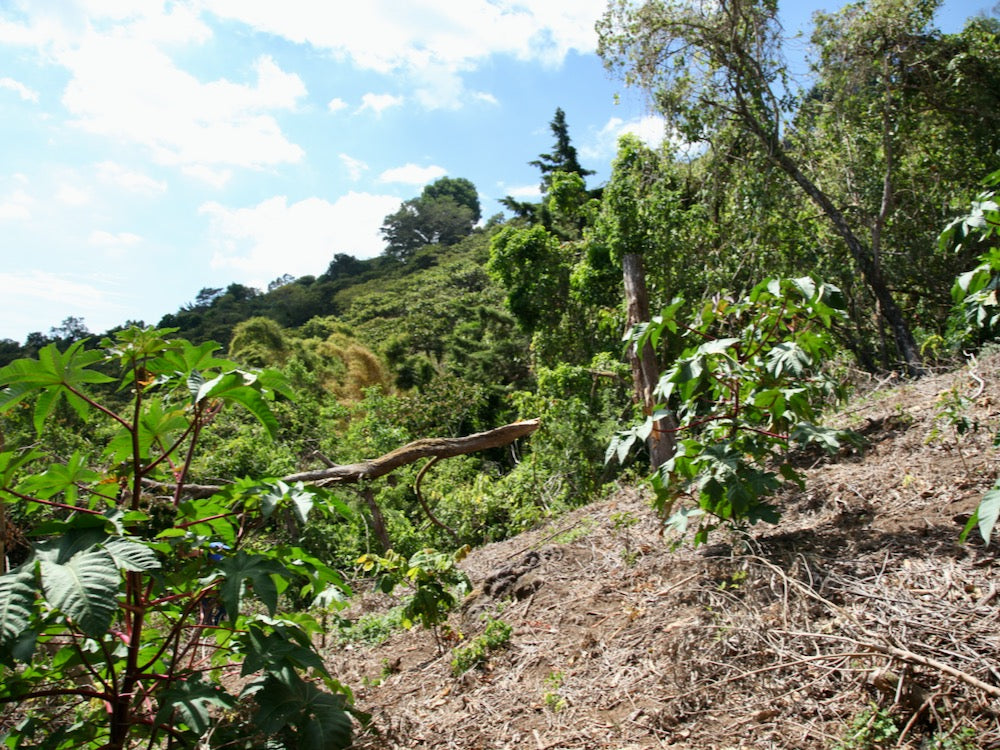
Gloria's six properties are spread across the slopes of the Apaneca-Ilamatepec range, each occupying its own ecological niche within one of El Salvador's most important coffee-growing regions. Altitudes span from around 1,350 to 1,650 metres above sea level, and the combination of volcanic soils, cool temperatures and consistent shade creates ideal conditions for high-quality speciality coffee.
Finca San José is the family's flagship – continuously cultivated since 1815. Positioned on the northwestern slope of an extinct volcanic crater at approximately 1,500 metres, the farm features rich loamy clay soil and an average temperature of 17°C. It encompasses the Laguna de Las Ninfas, a crater lagoon surrounded by water lilies, and grows primarily Red, Orange, and Yellow Bourbon alongside the family's prized Elefante. Dense shade from native trees places it within the UNESCO Apaneca-Ilamatepec Biosphere Reserve.
Finca La Lagunita sits at the highest point of Gloria's holdings at 1,650 metres, occupying 3.5 hectares of coffee surrounding a volcanic crater lagoon atop Apaneca Hill. The upper slopes remain preserved as a native forest sanctuary with hundred-year-old trees, supporting remarkable biodiversity.
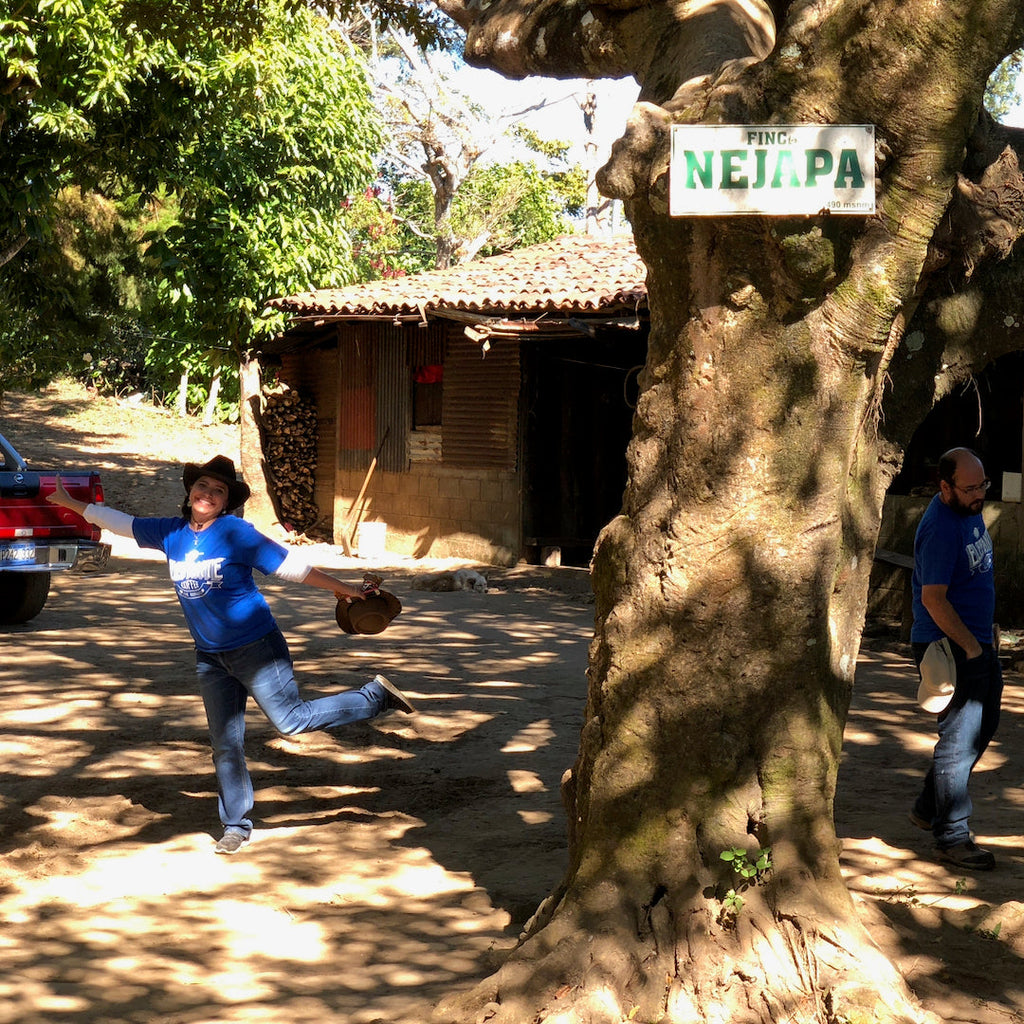
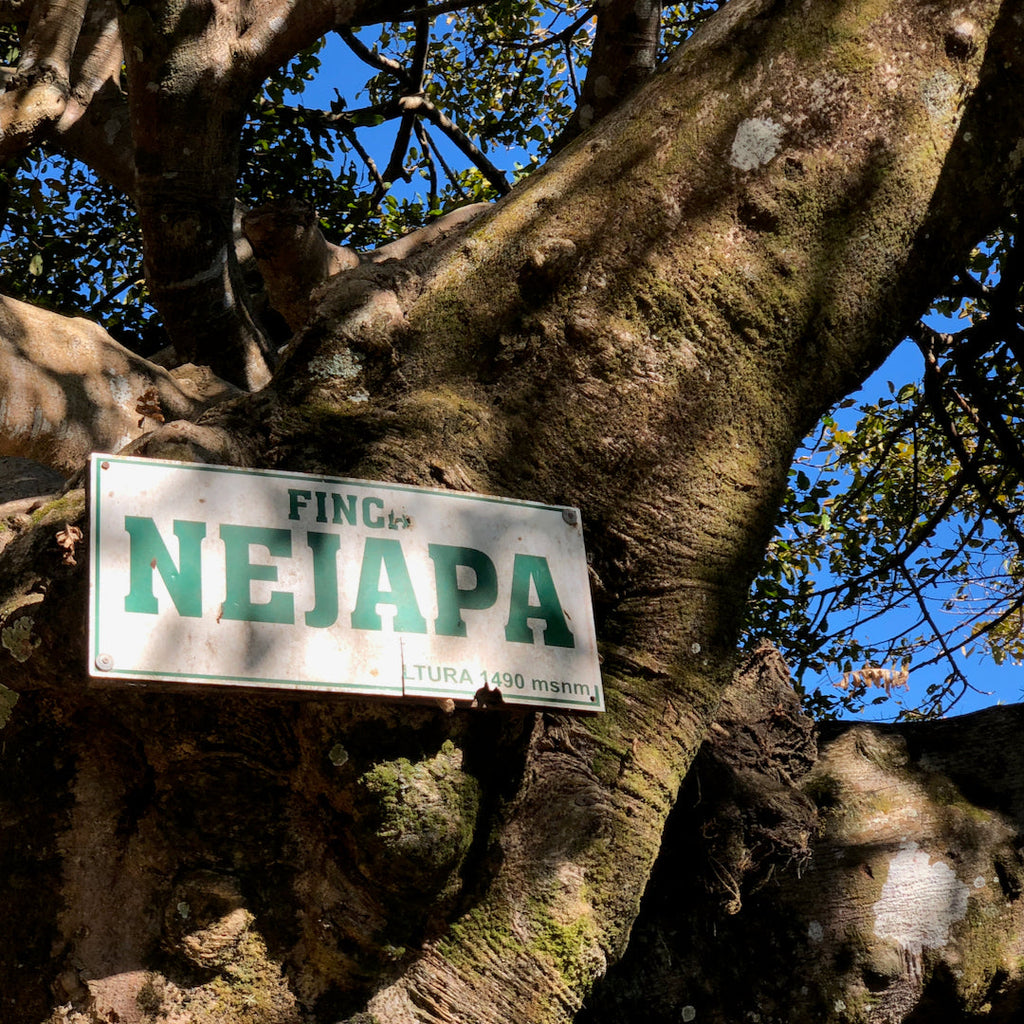
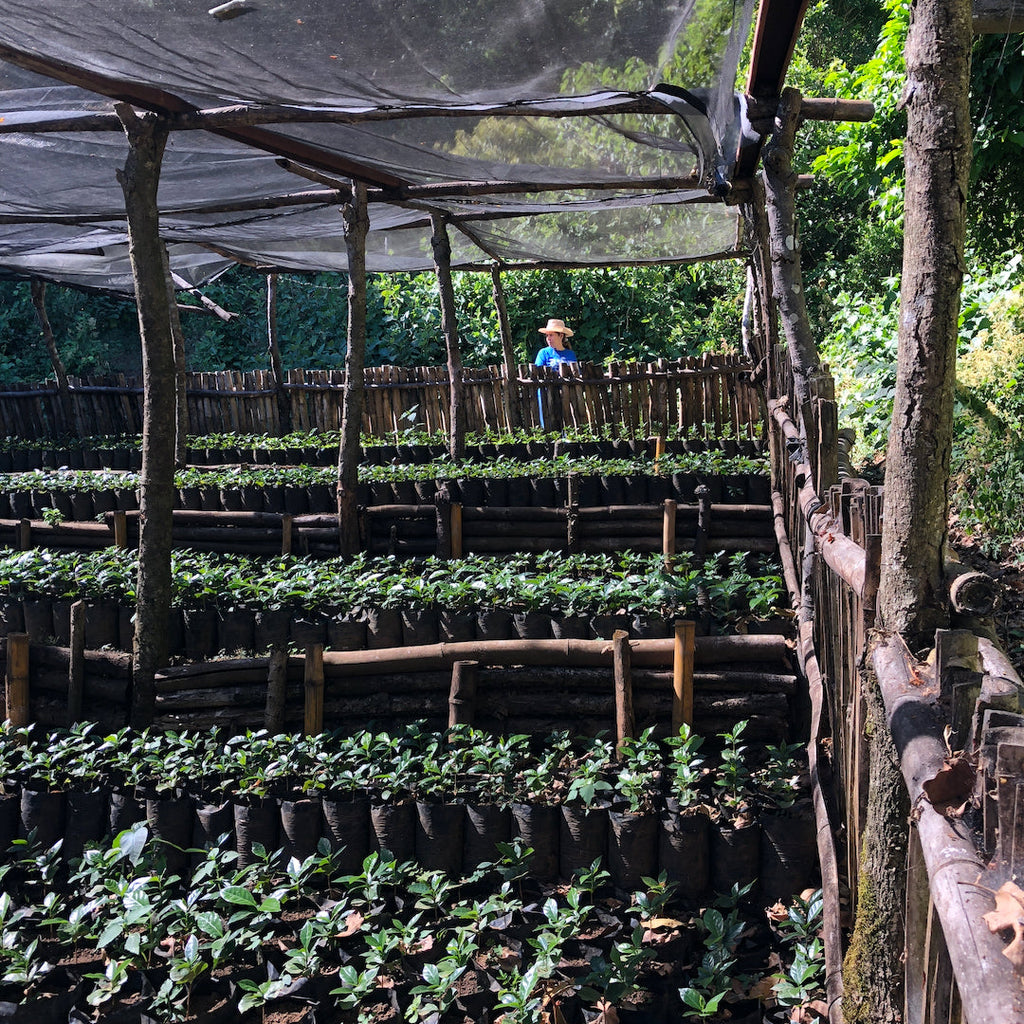
Finca Nejapa spans 18.2 hectares with 6.3 hectares planted in coffee, ranging from 1,470 to 1,570 metres. Gloria's father José María inherited the land in the 1950s – then cattle pasture – and converted it to coffee production. The farm is organised into tablóns (plots) named Los Vientos, Roma, Santa Marta, and Hamburgo. Seven hectares have been reforested with cedar trees, and views stretch to the Santa Ana and Izalco volcanoes and the Pacific Ocean.
Finca Nueva Granada lies in Ataco at a lower 1,350 metres elevation. José María purchased this approximately 5-hectare property in 1987 from Antonio Alfaro – the land had been neglected for years but showed exceptional potential. Gloria assumed ownership in 1995. The farm is dedicated to heirloom Bourbon with some Typica plantings dating to the early 1900s. Shade coverage comes from approximately 85 Inga trees per hectare.
Finca El Porvenir ("The Future") operates between 1,400 and 1,500 metres, featuring Bourbon and Typica under a microclimate marked by cool nights and constant wind. Its terroir produced the Cup of Excellence-winning lot that launched Gloria's international recognition.
Finca Mamatita completes the portfolio as part of the family's collective farms operating under the name "Stricta Alturra."
The Elefante discovery
About a decade ago, mysterious coffee trees were discovered on the Rodríguez family farms. These naturally mutating plants resembled their neighbouring Bourbon and Typica but bore fruit twice as dense, much larger, and containing up to five times more mucilage – 9 to 15 drops of juice per cherry compared to typical varieties. The family harvested a small separation and found one of the juiciest, most interesting coffees they'd encountered.
Recent genetic testing through World Coffee Research revealed Elefante to be a hybrid of an unknown Ethiopian landrace and Bourbon. The original trees are estimated at 30-35 years old. The family began collecting seeds and planted new plots at 1,700 metres – the highest peak of their farms – where "Elefante Nuevo" now grows alongside the older "Elefante Viejo" vines at lower elevations.
The cherries are round with elongated seeds similar to heirloom Ethiopian types; some beans exhibit a small "horn" on one side. Though low-yielding, Elefante produces exceptional cups with notes of juicy lychee, jasmine blossom, turbinado sugar, lavender, dark fruit, cocoa, and spice – characteristics reminiscent of Ethiopian strains.
Traditional techniques
The Rodríguez farms practise "agobio," a traditional Salvadoran cultivation method used in the Santa Ana volcano region for more than 50 years. Rather than "stumping" – cutting trees at the base – agobio involves bending the trunk of a young coffee tree at approximately 45 degrees and tying it down. The philosophy treats the trunk as a "spine" that's never cut.
This inclination stimulates dormant buds, causing multiple new vertical shoots to sprout from the bent trunk. These shoots eventually become independent producing trees. The result: 3-4 producing generations of coffee trees growing from a single root system, creating harvest stability, increased total production, and preservation of the original trunk's genetic character and vigour.
For older, inflexible plants, "agobio de raíz" (root agobio) is employed – a hole is excavated at the trunk's base to allow bending without breaking. These methods preserve much of the health, nutrition and character residing in the coffee tree's trunk and root system.
Breaking barriers
Gloria has spent her career navigating an industry that has historically been dominated by men. Taking on ownership and leadership roles wasn't always straightforward, but through persistence and deep practical knowledge she established herself as the driving force behind her family's farms.
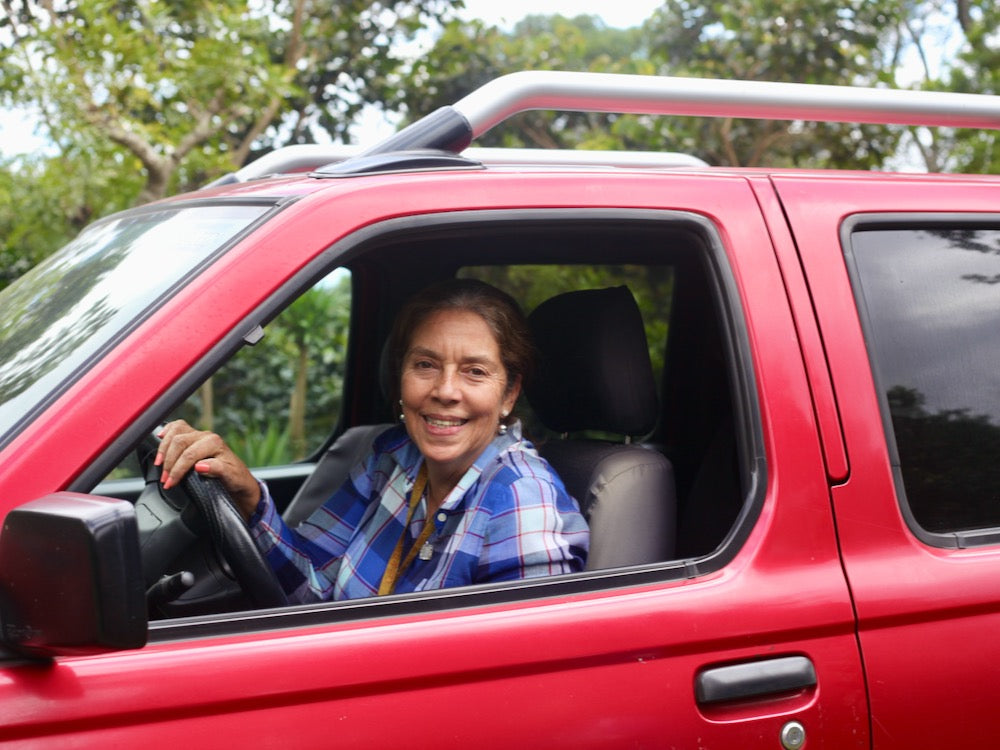
Today, she personally supervises production across all six farms, making decisions on harvesting, pruning, replanting and processing, and remaining closely involved in day-to-day work on the ground.
Her operation now spans three generations. Daughter María Jose ("Majo") represents the fifth generation with experience in quality and marketing. Son Roberto owns plots within the family farms and has entered Cup of Excellence under his own name. The family even created a farm called "La Gloria" in her honour – it's won Cup of Excellence awards in two consecutive years.
People and process
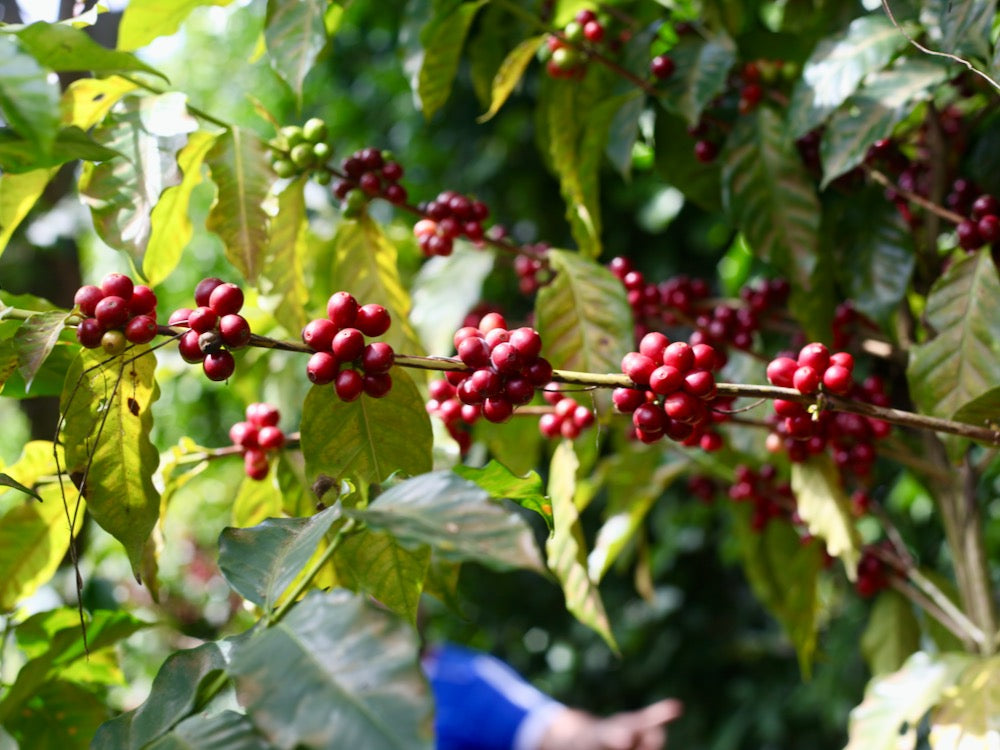
Coffee on Gloria's farms is harvested entirely by hand, with pickers selected for their experience and care. Only fully ripe cherries are collected – ripeness measured visually, by tasting the mucilage, and using a refractometer – and all processing is carried out with strict attention to quality.
Gloria maintains approximately 35-65 harvest workers seasonally and a year-round team of 12-17 people. Her approach prioritises developing a solid, trained and skilled working group that receive better wages and working conditions. During harvest, she pays approximately 90% above the legal minimum wage to incentivise quality picking. After each production cycle, she provides a proportional bonus – typically 1.2 months of extra income for her year-round team.
Gloria works closely with her team at every stage, supported by long-time foreman Antonio "Tonio" Avelino. Together, they maintain speciality standards across all farms through careful pruning, selective harvesting and ongoing renewal.
The region
Gloria's farms sit within the Apaneca-Ilamatepec mountain range – a UNESCO Biosphere Reserve formed by 14 volcanoes including Ilamatepec/Santa Ana at 2,381 metres (El Salvador's highest) and the famous Izalco, known as "The Pacific Lighthouse." The region received El Salvador's first Denomination of Origin certification in 2010.
Coffee grows on andisols – fertile volcanic soils formed from ash and rich in natural potassium and minerals. In 2005, Santa Ana volcano erupted and deposited ash that initially burned plantations but ultimately rejuvenated soils with minerals. The name "Apaneca" derives from Nahuatl meaning "place of water and winds" – constant Pacific breezes from just 18 kilometres away raise humidity and strengthen bean density.
This is the birthplace of both the Pacas variety (discovered 1949) and Pacamara (developed 1958). Cup profiles from the area characteristically feature bright, elegant acidity; delicate, complex structure; fruity notes of peach, berries, and citrus; floral jasmine and orange blossom; and sweet chocolate and caramel.
A family timeline
José María Rodríguez and Josefina Rodríguez plant the first coffee trees by hand at Finca San José in the Apaneca region, establishing the foundations of the Rodríguez family's coffee legacy.
Coffee farming knowledge is passed down through successive generations, with the family continuing to work the land and refine their understanding of the local environment.
Gloria's father, José María Rodríguez Herrera, inherits and manages parts of the family land, expanding coffee cultivation and converting Finca Nejapa from cattle pasture to coffee production.
Many of the Bourbon trees still producing today are planted during this period, alongside the continued use of traditional Salvadoran techniques such as agobio and agobio de raíz.
José María purchases Finca Nueva Granada in Ataco – neglected land showing exceptional potential that Gloria will later transform.
Gloria takes on an increasingly active role in the family farms, assuming ownership of Nueva Granada in 1995 and eventually leading operations across multiple properties.
Gloria enters Cup of Excellence for the first time – and wins. She has placed in every competition she's entered since.
Finca El Porvenir takes top honours at Cup of Excellence, launching long-term partnerships with speciality roasters worldwide.
We begin sourcing coffee from Gloria's farms, marking the start of a relationship that continues to this day.
The Elefante varietal is discovered on the family farms – mysterious trees bearing unusually large, juice-rich cherries that genetic testing later reveals to be a Bourbon-Ethiopian hybrid. Gloria consolidates her role as a leading producer in Apaneca, earning continued recognition in speciality coffee markets.
Finca Nejapa places third overall at Cup of Excellence with an Elefante lot – the highest-ranking washed coffee in the top five.
As older Bourbon trees reach the end of their productive life, Gloria begins a careful replanting programme, balancing renewal with respect for the work of earlier generations. The fifth generation – including daughter María Jose and son Roberto – take increasingly active roles in the family operation.
Gloria oversees six family farms totalling around 38 hectares, working closely with her team and long-time foreman Antonio "Tonio" Avelino to produce coffees defined by place, tradition and care.
A long-standing relationship
Coffees from Gloria's farms have earned a strong reputation in the speciality coffee world, including recognition in national competitions and international auctions. More importantly to us, they represent a long-term relationship built on trust, shared values and mutual respect.
Each harvest reflects Gloria's steady, thoughtful approach to farming – coffees shaped not by trends, but by place, people and time.