

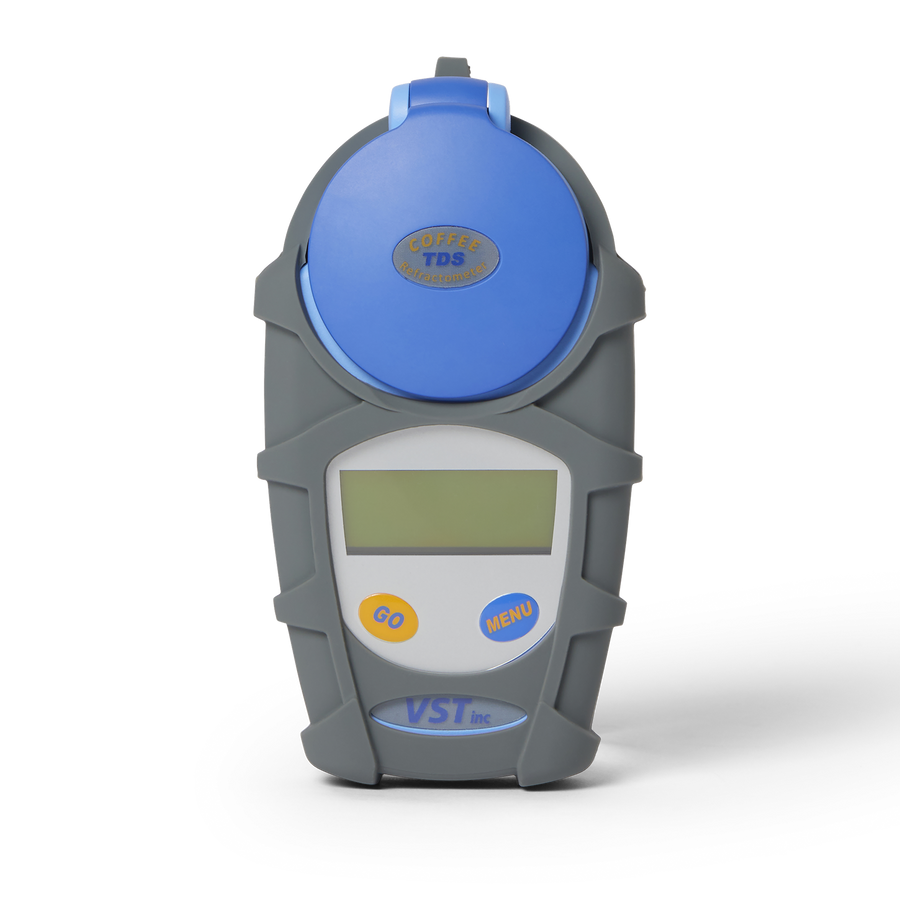
VST LAB Coffee III Refractometer
PayPal Pay in 3 and Klarna Available at Checkout
-
The Industry Standard for Coffee Measurement
The VST LAB Coffee III Refractometer is the original scientific instrument that revolutionised how the coffee world measures, understands, and repeats brew quality. Whether you're dialling in a new single origin, training staff on extraction principles, or simply chasing that perfect cup, this fourth-generation refractometer delivers laboratory-grade precision in a handheld device built for the demands of commercial coffee environments. For over 15 years, VST refractometers have empowered baristas, roasters, and researchers with data they can trust, and this latest iteration represents the pinnacle of that development.
By measuring Total Dissolved Solids (TDS) in your coffee or espresso, you gain objective insight into what's actually happening during extraction. The TDS information, along with your brewing recipe and final beverage weight, can be used to calculate and plot extraction yield, giving you the data needed to troubleshoot underextracted sourness or overextracted bitterness with confidence rather than guesswork. Combined with VST's CoffeeTools software, it lets baristas and roasters map extraction yield, fine-tune brews in real time, and achieve the flavour profile they love consistently.
The VST refractometer is the global standard for competitions, R&D labs, and quality-focused cafés, having served as the official tool at the World Brewers Cup, World Cup Tasters, and World Barista Championship from 2012 to 2022. It's the standard against which all other coffee refractometers are compared. For roasteries like ours, it's an invaluable tool for quality control and recipe development, and we're pleased to make it available to fellow coffee professionals and enthusiasts who want to bring the same rigour to their brewing.
- TDS Measurement Range: 0.00% to 20.00% (auto-ranging between coffee and espresso scales)
- Precision: ±0.01%
- Accuracy (Coffee Range 0.00-4.99%): ±0.03%
- Accuracy (Espresso Range 5.00-20.00%): ±0.05%
- Optical System: Advanced 1024-element detector array with sapphire optics
- Temperature Compensation: Automatic, 15°C to 40°C
- Display: 24-character backlit LCD, two-line readout
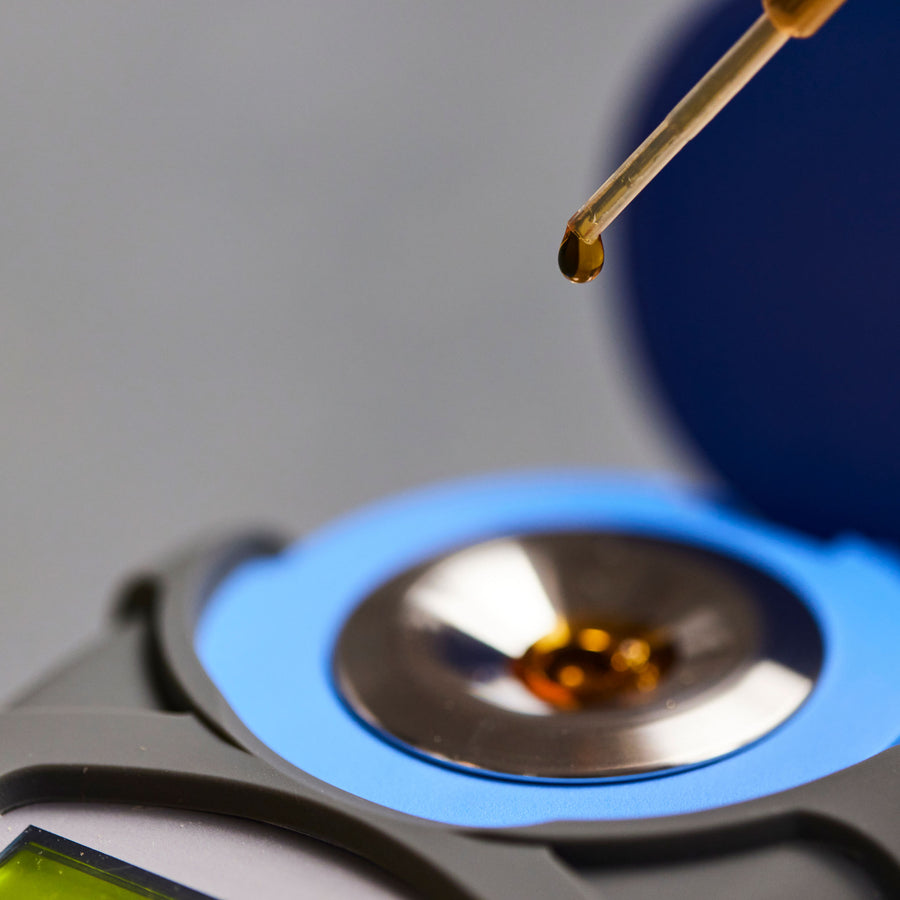
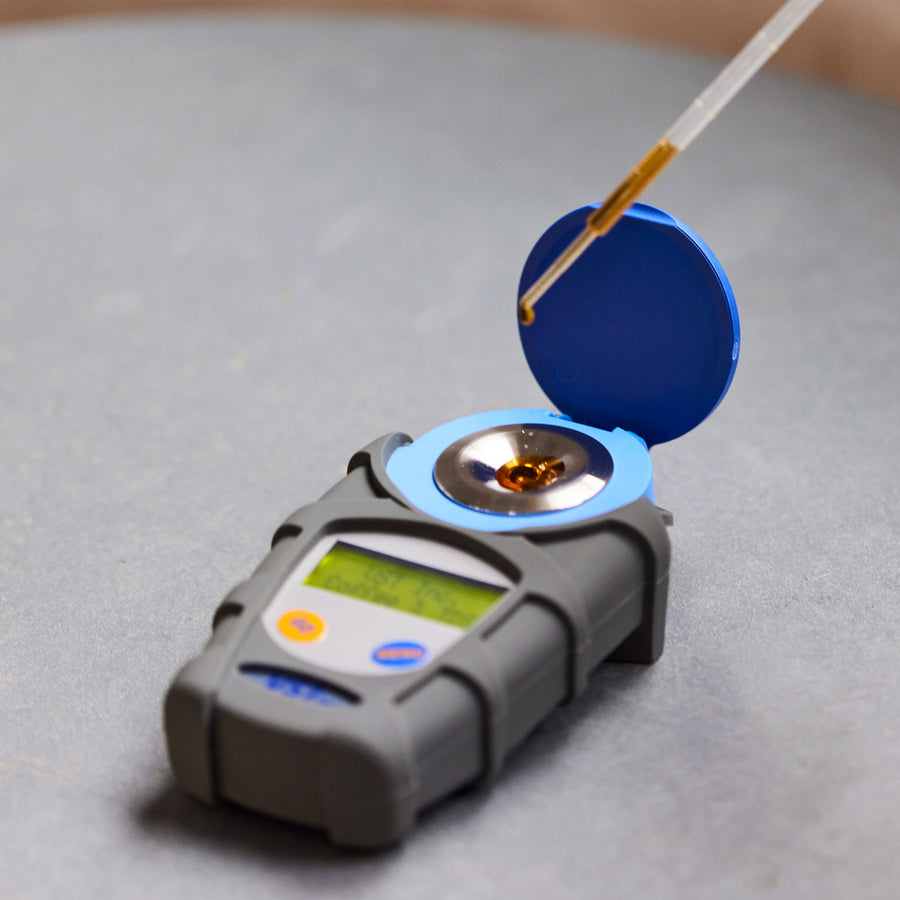
- Sample Well: Stainless steel with evaporation cover and ambient light shield
- Measurement Time: 2-3 seconds (automatically averages multiple readings)
- Language Options: English, Spanish, German, French, Russian
- Power: Two AAA batteries (4,000+ measurements per set)
- Construction: Rubberised silicone armour jacket for durability
- Calibration: Smart Zero-Set software using distilled water
- Certification: NIST Traceable Reference Standards certificate included
- Country of Manufacture: USA
- Software Compatibility: Works with VST CoffeeTools for Windows, macOS, iOS, and Android (software sold separately)
- VST LAB Coffee III Refractometer with integrated auto-ranging Coffee and Espresso TDS scales
- Grey rubberised silicone armour jacket
- Pipettes (10 pieces)
- Cleaning pads (10 pieces)
- Syringe filter kit (50 filters, 5 syringes) for espresso and metal-filtered coffee samples (additional filters available separately)
- NIST Traceable Quality Assurance Certificate
VST Software Links
What is TDS and why does it matter for coffee brewing?
TDS stands for Total Dissolved Solids and represents the percentage of your brewed coffee that consists of dissolved coffee compounds rather than water. The TDS value is a measure of coffee strength: a stronger coffee has a higher TDS percentage, while a thinner one has a correspondingly lower value. Studies have determined that most people prefer their brewed coffee with a finished concentration of 1.15% to 1.35% TDS for filter coffee, while espresso typically sits around 9% to 10% TDS. Knowing your TDS allows you to make informed adjustments to your brewing parameters.
How do I calculate extraction yield from a TDS reading?
The refractometer itself measures TDS only. To calculate extraction yield, you'll need to input the TDS reading along with your coffee dose and final beverage weight into VST CoffeeTools software (available for Windows, macOS, iOS, and Android). The software then calculates what percentage of your ground coffee was actually dissolved into the brew, with the widely accepted target range being 18% to 22% extraction yield for most brewing methods.
Do I need to filter my coffee samples before measuring?
If your brew does not go through a paper filter, it needs to be filtered before you measure it. This includes espresso and coffee brewed with metal mesh filters such as French press or certain pour-over drippers. The included syringe filter kit is designed for this purpose. Paper-filtered pour-over and batch brew samples can typically be measured directly without additional filtration.
What makes the VST refractometer better than cheaper alternatives?
The VST measures coffee strengths from 0.00% to approximately 20% TDS and achieves outstanding accuracy of ±0.03% in the coffee range. Its advanced optical engine uses a 1024-element detector array with sapphire optics, providing the resolution needed for meaningful, repeatable measurements. It remains the gold standard for TDS measurement and extraction analysis and is the tool of choice in world competitions, R&D labs, and quality-focused cafés globally.
How do I calibrate the refractometer?
The VST LAB Coffee III features Smart Zero-Set software that allows you to calibrate using readily available distilled water. Simply place a small sample of distilled water on the sample well and follow the on-screen prompts to zero the device. This ensures accurate readings at the start of each sampling session.
What temperature should my coffee sample be?
The refractometer has built-in non-linear temperature compensation, which guarantees accurate readings at sample temperatures from 15°C to 40°C. However, for the most consistent results, many professionals allow their samples to cool to room temperature before measuring, as this reduces the risk of evaporation affecting the reading.
Is the VST CoffeeTools software included?
The refractometer can be used standalone to measure TDS, but the VST CoffeeTools software for calculating extraction yield and charting your results is sold separately. The software is available for Windows, macOS, iOS, and Android devices.
How long do the batteries last?
The device is powered by two AAA batteries, which last for over 4,000 measurements with the backlight turned on.
Can I use this refractometer for tea as well?
While the VST LAB Coffee III is calibrated specifically for coffee and espresso, it can provide TDS readings for tea. However, the accuracy specifications are validated for coffee, and tea may require different interpretation of results.
What's the difference between the VST refractometer and a Brix refractometer?
While a Brix refractometer can technically be used to measure coffee, they tend to be less accurate and require more calculations. The VST was specifically designed for coffee measurement, with scales and temperature compensation algorithms optimised for the unique properties of dissolved coffee compounds, making it far more practical and reliable for daily use in a café or roastery environment.
-
You may also enjoy
-
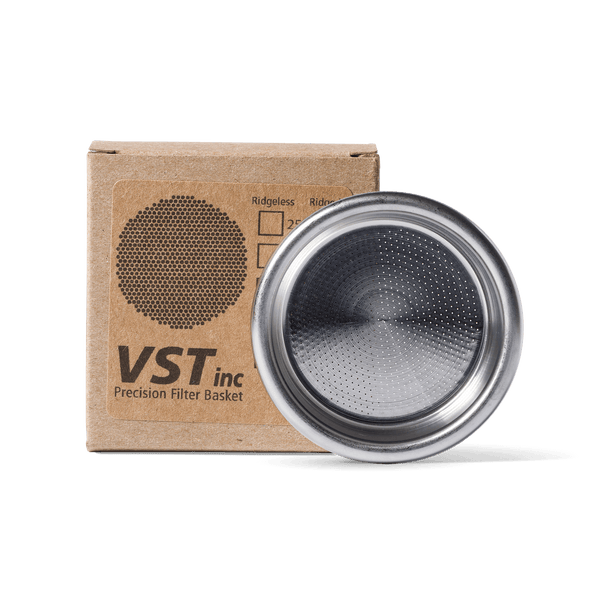
VST Precision Filter Baskets
From £35.00
Micro-machined to ±5% tolerance, individually QC-reported and laser-etched. Ridged or ridgeless, 15g to 25g, built for repeatable shots.Quick add
-

Used to quickly remove suspended solids and CO2 gas from ESPRESSO beverages for accurate, repeatable refractometer measurements.Quick add


Did you know we also stock a wide range of coffee brewing equipment?
From the likes of AeroPress, Behmor, Chemex, Clever Dripper, Fellow, and Kalita - we've got you covered for all your brewing needs
View our brewers