Small Farms, Big Ambitions
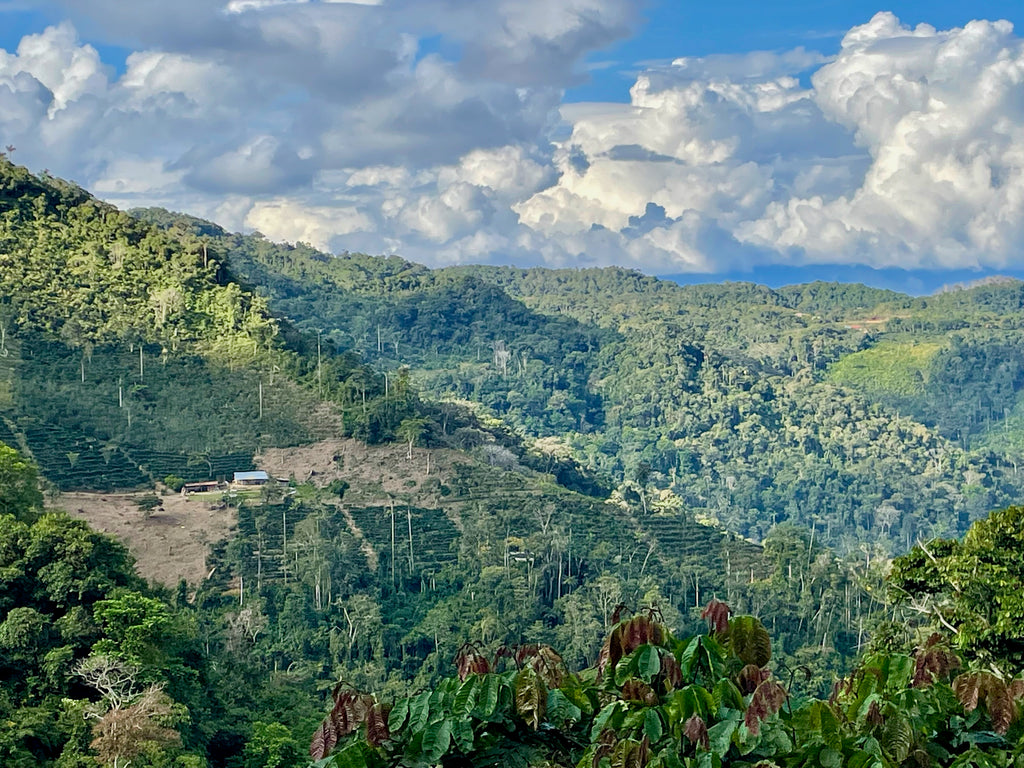
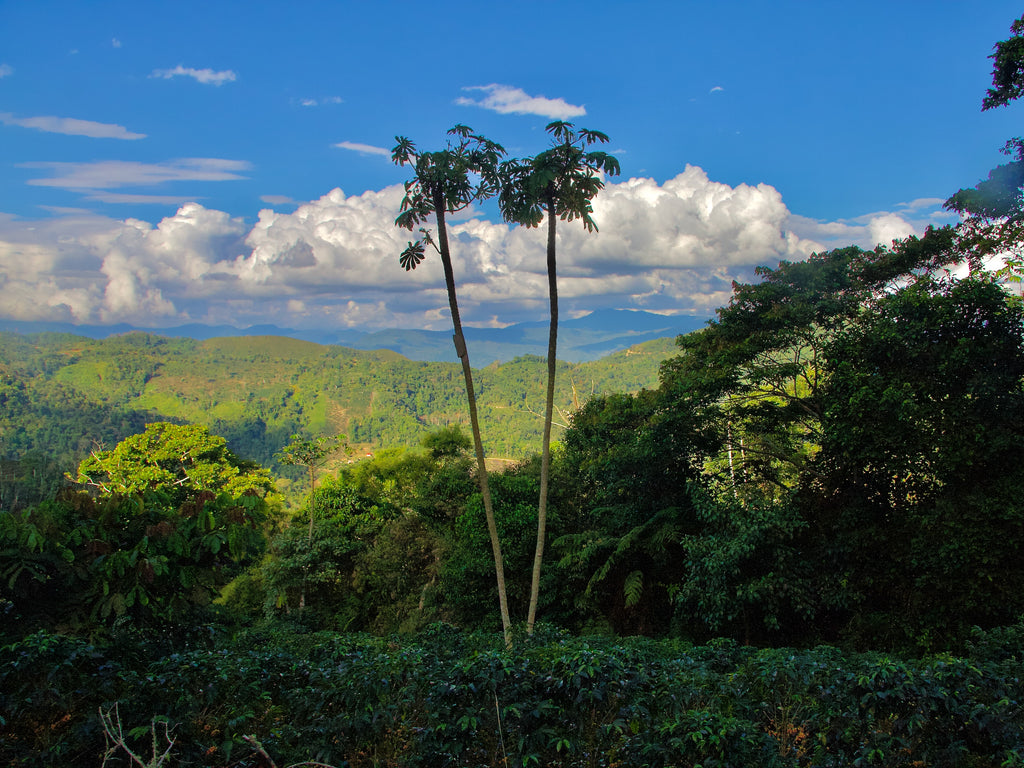
The Bolinda colonia sits in a lush, steep valley just east of Caranavi – a small town that's become the epicentre of Bolivian specialty coffee. It's remote, even by local standards. The kind of place where farmers load freshly picked cherries into the back of a pickup and navigate winding mountain roads to deliver them before nightfall.
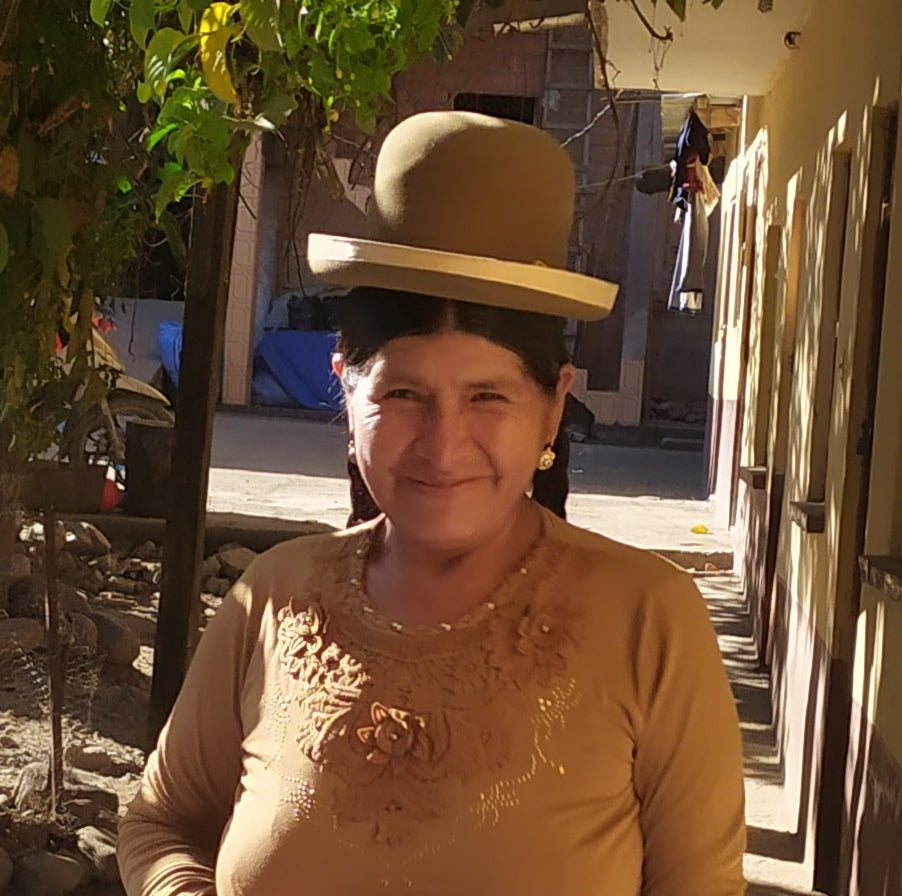
Mercedes Condori, Pedro Flores, Brenda Palli and their neighbours are smallholders. Their farms are modest – typically just one to three hectares of Caturra and Catuai varietals, planted on steep terrain between 1,550 and 1,650 metres above sea level. But what they lack in scale, they more than make up for in meticulous care.
Picking with Precision
To ensure only the ripest cherries make it off the tree, these producers don't take shortcuts. It's not uncommon for them to do seven or eight harvesting passes across their plants throughout the season. That's extraordinarily labour-intensive – each pass yields smaller amounts – but it's what separates good coffee from exceptional coffee. Ripe cherries mean more developed sugars, cleaner fermentation, and ultimately a sweeter, more complex cup.
The trade-off? Each individual delivery is tiny. Too small to process as a standalone lot. So instead, cherry from all the Bolinda producers is combined and processed together at the Rodriguez family's Buena Vista mill in Caranavi. It's a community effort in the truest sense.
The Sol de la Mañana Programme
The producers in Bolinda are all part of Sol de la Mañana (Spanish for "morning sun") – Bolivia's first producer mentoring programme, and one of the most significant interventions in the country's coffee industry in recent decades. It was established by the Rodriguez family in 2014, when a group of neighbouring farmers approached them asking for help.
At the time, most coffee farms in the region were what the family would classify as "wild". Producers would enter their land only during harvest season, with little understanding of how to care for plants year-round, prevent disease, or maximise yields. The results were predictable: most farmers were producing just two to four bags of green coffee per hectare – nowhere near enough for a sustainable livelihood.
Sol de la Mañana changed that. The programme runs for seven years, functioning like a school for producers. It covers everything from nursery management and soil preparation to selective harvesting and financial planning. The Rodriguez family built a model farm and nursery at their Buena Vista mill to demonstrate best practices firsthand. Today, many participating farmers achieve yields of 20 to 30 bags per hectare – a tenfold increase for some. Producers also receive 70% of the price their coffee sells for, ensuring the quality improvements translate directly to their incomes. The programme now supports over 100 farms across the Caranavi region, and its ripple effect is spreading: neighbouring farms outside the programme have begun to emulate the techniques they see working around them.
Processing at Buena Vista
When cherry arrives at the mill each evening, every sack is unloaded and checked. A sample is taken alongside detailed information about the delivery – farm, producer, elevation, varietal – which allows each lot to be tracked and quality results fed back to the producer. This feedback loop is crucial. It helps farmers understand what's working and where they can improve.
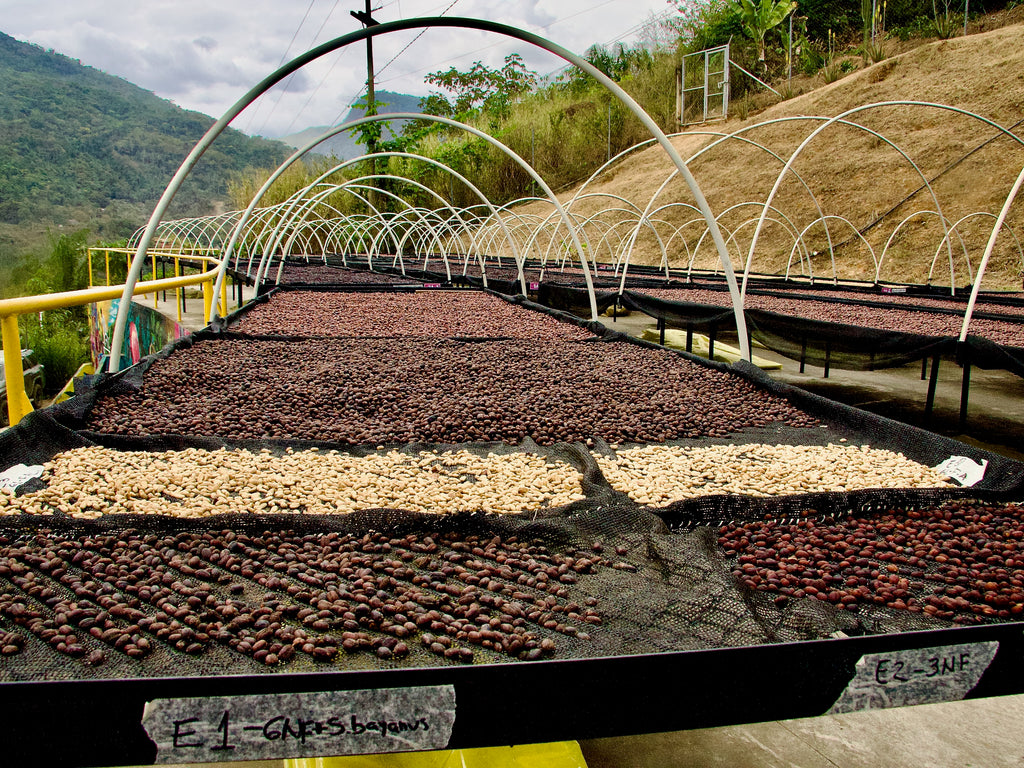
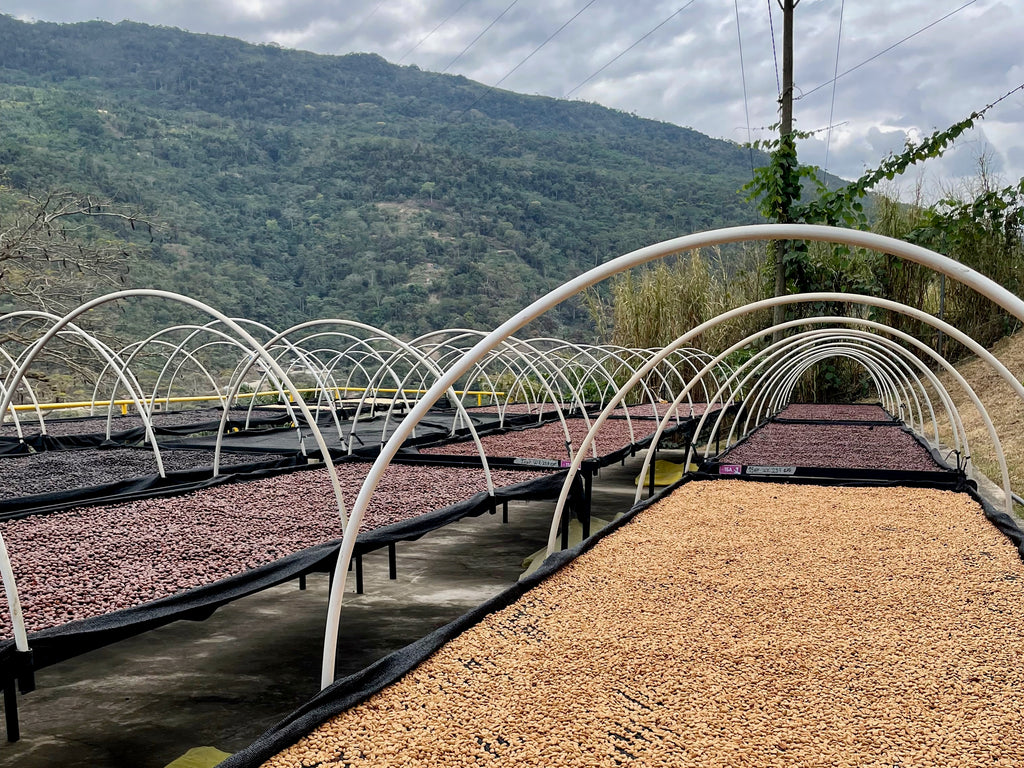
The traditional way to process coffee in Bolivia is via the washed method. But the Rodriguez team have gone considerably further. Taking inspiration from the wine industry, they've introduced an anaerobic fermentation stage carried out in sealed stainless steel tanks. Crucially, the fermentation itself is guided by onsite oenologist Iván Hugas, who prepares what the family call mosto – a carefully calibrated solution of harvested yeasts and bacteria that catalyses a precisely controlled fermentation. The tanks are closely monitored throughout, with the coffee removed once the desired fermentation profile is reached. Because of Caranavi's constant humidity and hot days, drying afterwards is almost entirely mechanical – not a compromise, but a deliberate choice for protection and consistency.
A full harvest at Buena Vista generates around 3,000 unique lots, each treated separately before being combined or marketed as microlots. When you're working with cherry from dozens of smallholders, this granular level of control is what makes the difference between a good blended lot and an exceptional one.
Why Bolivia Matters
Bolivia has near-perfect conditions for growing exceptional Arabica – high altitudes, nutrient-rich soils, and microclimates that slow cherry maturation and concentrate sugars in the fruit. But the country's coffee industry has faced serious challenges. Production peaked in the early 1990s at around 150,000 bags annually; by 2020 that number had fallen to just 22,000. Coffee here competes with coca cultivation, and the infrastructure challenges of being landlocked – every bag must cross the Andes at over 4,000 metres and reach the port of Arica on Chile's coast – have made exporting difficult and expensive.
Programmes like Sol de la Mañana are genuinely saving Bolivian coffee culture. As Pedro Pablo Rodriguez has put it: "If we did not take action, Bolivian coffee would have slowly disappeared." The work happening in communities like Bolinda – small farms, multiple picking passes, oenologist-guided fermentation – is proof that quality and sustainability can go hand in hand, even at the very edges of what's logistically possible.
Bolinda is where we've been buying from longest in Bolivia, and the farmers here are also neighbours to some of our other favourite producers in the region. If you'd like to explore more of what Caranavi has to offer, take a look at our other Bolivian coffees.
Details
- Country: Bolivia
- Region: Caranavi
- Colonia: Bolinda
- Elevation: 1,550 – 1,650 m.a.s.l.
- Varietals: Caturra & Catuai
- Programme: Sol de la Mañana