Bolivia: Las Alasitas, Yellow Caturra
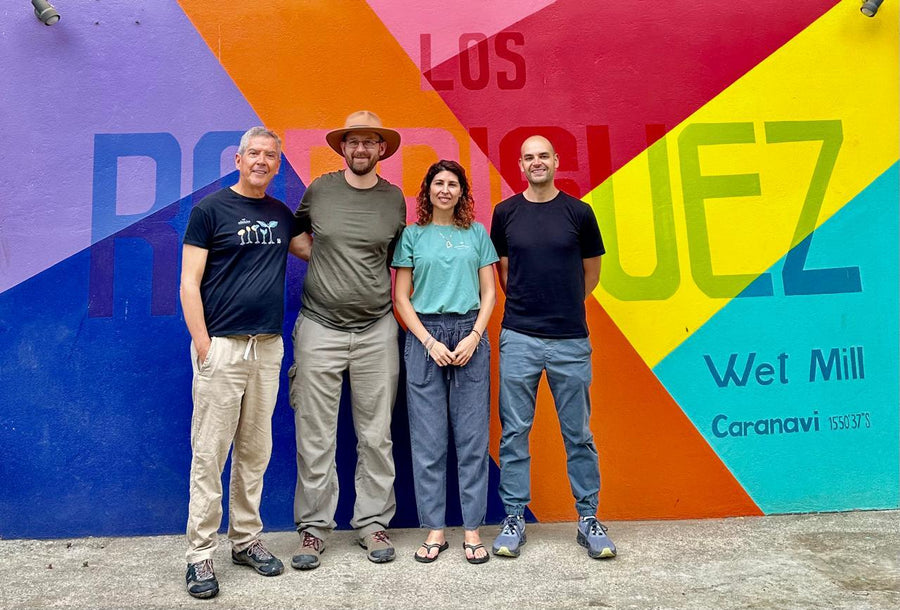
Fincas Los Rodriguez
-
This full bodied coffee has a lovely texture which backs up flavours of marzipan and brown sugar, with a hint of milk chocolate which slips into dark chocolate on the aftertaste.
Named after the annual festival celebrating wishes and abundance, Bolivia Las Alasitas is a coffee built on vision and possibility. "Las Alasitas" translates to "buy me" in Aymara, and during the festival – which kicks off each year on 24th January in La Paz – locals purchase miniature figurines representing their hopes for the coming year. Everything from tiny cars to miniature coffee sacks are blessed by yatiris (traditional healers) and Catholic priests alike, then given to friends and family in the belief that recipients will receive the real thing before the year is out. At the heart of it all sits Ekeko, the Aymara god of abundance – a chubby, moustachioed figure laden with baskets and bags, who watches over Bolivian households and rewards generosity.
It's a fitting name for a farm where the Rodríguez family continue to plant seeds – both literally and figuratively – for the future of Bolivian coffee.
This full-bodied washed coffee delivers a beautifully rich texture that carries flavours of marzipan and brown sugar, with a gentle hint of milk chocolate that deepens into dark chocolate on the aftertaste. The Yellow Caturra variety – a compact, golden-fruited mutation of Bourbon first selected in Brazil – tends toward tropical fruit sweetness at altitude. Here, though, the family's anaerobic washed processing tempers that brightness into something rounder and more confectionery.
Grown at 1,642 metres above sea level in Bolinda – a steep, green valley whose name is a contraction of "Bolivia Linda" (Beautiful Bolivia) – Las Alasitas benefits from cool nights and mild days that slow the ripening of cherries. This extended maturation allows sugars to concentrate and complexity to build, resulting in a cup that rewards those who appreciate the finer details of speciality coffee.
After selective hand-picking, cherries are delivered to Agricafe's Buena Vista mill in Caranavi, where they undergo flotation sorting before depulping. From there, wet parchment is placed in sealed stainless steel fermentation tanks – the same kind you'd find in a winery – where onsite oenologist Iván Hugas has prepared what the family call mosto: a carefully calibrated solution of harvested yeasts and bacteria that catalyses a controlled anaerobic fermentation. The tanks are closely monitored throughout, with the coffee removed after around 48 hours once the desired fermentation is complete. The parchment is then pressure-washed clean and dried – either on raised beds or in the family's signature "coco" dryers (gentle-heat box dryers Pedro discovered during his time in peanut production), depending on humidity. Finally, it rests at La Luna, the family's state-of-the-art dry mill in La Paz, before export.
First planted in 2014, Las Alasitas was Agricafe's first step into farming – part of an ambitious project to revive Bolivia's declining coffee industry. Pedro Rodríguez swapped his accountant's suit for agriculture three decades ago, and the family had been sourcing coffee from small producers in Caranavi and Samaipata ever since. But watching production decline put the sustainability of their business at risk. In response, they bought land to showcase modern practices and establish model farms that other producers could learn from. Las Alasitas is now home to Agricafe's variety nursery, where agronomists cultivate seedlings of prized varietals like Geisha, Java, and San Bernardo to share with local farmers. At the top of the farm sits La Casita – a small house where the family welcome guests to enjoy the sweeping views over the valley at sunrise and sunset, coffee in hand.
Through their Sol de la Mañana programme, the Rodríguez family empowers local farmers with training and skills to improve quality and yields – helping ensure the future of Bolivian coffee doesn't rest on their shoulders alone. We're proud to support their work.
-
- Country: Bolivia
- Region: Yungas
- Province: Caranavi
- Colony: Bolinda
- Farm: Las Alasitas
- Producers: Fincas Los Rodriguez
- Processing Method: Washed
- Varietal: Yellow Caturra
-
Medium
How We're Roasting This Coffee
We've developed this coffee through a medium roast profile that emphasises body and sweetness while preserving the delicate complexity that makes Yellow Caturra special. The roast is taken through first crack and allowed to develop slightly in the gap before being dropped just as second crack begins - typically marked by the first few pops.This approach gives us a roast that sits comfortably in medium territory: developed enough to build substantial body and bring forward those marzipan and brown sugar notes, but stopped before the darker roast flavours would overwhelm the variety's natural character. You'll find this coffee delivers a full, satisfying texture without the sharper acidity you might expect from a lighter-roasted washed coffee, whilst still maintaining clarity and sweetness on the finish.
Why We Roast It This Way
Yellow Caturra, particularly when processed using anaerobic fermentation, offers a flavour profile that walks an interesting line between bright fruit and confectionery sweetness. The Rodriguez family's processing protocol has already done the work of tempering the variety's typical tropical brightness into something rounder and more approachable. Our roast development honours that intention.By extending the development time slightly in the gap and finishing just at the threshold of second crack, we're encouraging the Maillard reactions that create those chocolate and caramelised sugar flavours without pushing into the roastier, more carbon-forward notes that would dominate at a darker degree. The result is a coffee where the farm's work, the careful fermentation control, the altitude, the varietal selection, remains the star, supported rather than obscured by the roast.
-
Tasting notes: Marzipan, dark chocolate, brown sugar.
Cup of Excellence Cupping Scores
- Clean cup: 6/8
- Sweetness: 6.5/8
- Acidity: 6/8
- Mouthfeel: 6.5/8
- Flavour: 6/8
- Aftertaste: 6/8
- Balance: 6.5/8
- Overall: 6.5/8
- Correction: +36
- Total: 86/100
If you would like to find out more about how we score coffees, make sure to read our blog post "What Do Coffee Cuppings Scores Actually Mean?" by clicking here.
-
Our coffee is roasted fresh and ships quickly – which means it might arrive a little lively. Here's the thing: freshly roasted beans are still busy releasing carbon dioxide (a natural byproduct of roasting), and all that activity can make your brew taste a bit sharp or unsettled.
Give it a few days to calm down and something lovely happens. Those brighter, edgier notes mellow out, sweetness develops, and the flavours you're actually after can really come into focus.
We recommend resting your coffee for at least 5-7 days from the roast date on the bag before brewing. A little patience goes a long way.
That said, this is just what we've found works best – not a rule. If you can't wait, we completely understand. Tuck in whenever you like.
-
-
Producer Stories
Learn more about coffee sourcingFincas Los Rodriguez
Fincas Los Rodríguez is a family-run coffee project led by Pedro and Daniela Rodriguez, focused on producing high-quality, traceable coffees across twelve farms in Bolivia’s Caranavi and Samaipata regions.
Read more