Bolivia: Las Alasitas, Anoxic Washed
Fincas Los Rodriguez
-
Think of a bowl of berry crumble, slathered in vanilla custard with a warming lift of nutmeg on the finish. There's also a little twist of orange in this comforting and well balanced cup.
“Buy me!” said Ekeko, and we did! This time, we’ve bought a delicious Anoxic Washed Red Caturra from Finca Las Alasitas.Buy this coffee!
The word Alasitas means “buy me” in Aymaran, an indigenous language widely spoken in the La Paz department of Bolivia. During the Alasitas festival locals buy miniature figurines representing their aspirations to be blessed by priests. These are then offered to Ekeko, the moustachioed pre-Colombian Tiwanakan god of prosperity, hoping that the real version will be granted in the coming year. Everything a person could possibly desire - cars, a successful marriage (represented by miniature hens!), even tiny coffee sacks - are offered as tokens to bring their wishes true. Alasitas was an apt name for Agricafe’s first farm, a formation of their vision for the future and the flourishing of Bolivian coffee.
Fincas Los Rodriguez
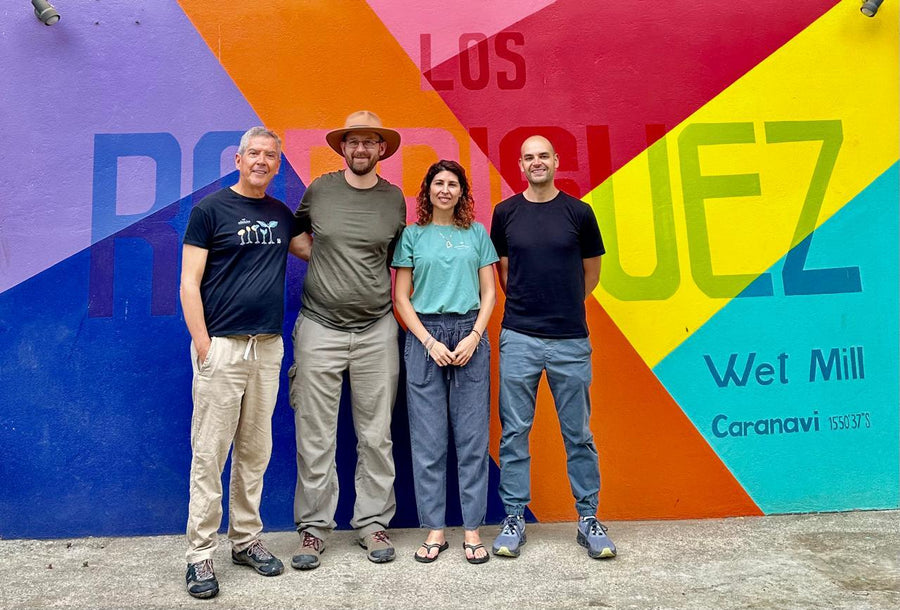
Las Alasitas was Agricafe’s first foray into farming as part of their ambitious project to revive Bolivia’s declining coffee industry. Tucked into the steep green valleys of Bolinda, just outside Caranavi, Las Alasitas sits at around 1,642 metres above sea level. Caranavi is located just north of the department of La Paz city, 150 kilometres from the capital, and is the central hub of Bolivian coffee production. The Rodriguez family had been sourcing coffee from small producers in the Caranavi and Samaipata regions for three decades, but the steady decline of Bolivian coffee production put the sustainability of their export business in jeopardy. In 2014 Daniela and Pedro bought land in the region to showcase modern practices and establish model Bolivian coffee farms that other producers could learn from, as well as increasing the overall volume at their mills.
The 20.6 hectares of land at Las Alasitas were first planted with 16 hectares of Red Caturra, Java, and Geisha. The farm now also serves as the family's variety nursery - a kind of experimental hub where agronomist Rodrigo Frigerio tends to seedlings of new coffee varietals for use across the wider Los Rodriguez farms. Its altitude and fertile soils make it perfect for producing brilliant and unique coffees. Cool nights and mild days slow the ripening of coffee cherries here, allowing sugars to concentrate and complexity to build. At the very top of the farm sits La Casita - a small house where the family welcome guests to enjoy the sweeping views over the valley at sunrise and sunset, delicious coffee in hand.
Looking to Tomorrow
From here they also launched their sustainability program, “Sol de la Mañana”: a quest to empower local coffee producers by providing the training and skills necessary to improve the quality of their farms. It was built on the principles of economic sustainability, social understanding, and environmental awareness for the community. It is a 7-year school for producers that guides them through every step of coffee farming, starting with the nursery, planting, harvesting, pest prevention, pruning, and financial management. Today the program has grown to include around 100 producers, helping them to improve quality and quantity at their coffee farms, enabling them to provide a better life for their families in the long term.
Meticulously Processed
Caranavi is the hub where most of Agricafe’s processing work is carried out - home to their Buena Vista wet mill and Moon Mill, alongside the El Fuerte mill in Samaipata. Every evening their Buena Vista wet mill is busy with deliveries from their own farms and local producers. Quality is checked every step of the way and each processed lot gets cupped on site to ensure it meets their strict standards. The team at the mill recently designed the new process applied to this Red Caturra lot, Manager Adrian has named it their “Anoxia Process”.
Whole cherries are first fermented underwater in a sealed tank for 24 hours. As the tanks are flushed with low pressure carbon dioxide to clear all oxygen before sealing, this prevents a viable yeast population developing from the small amount found on coffee cherries naturally. Adrian instead cultivates a batch of yeast in the lab - grown from a coffee cherry from one of their farms - and adds this large population into the coffee. Next the cherries are de-pulped to roughly the same level as a Yellow Honey coffee and the beans with their remaining cherry mucilage are taken for a second 48 hour fermentation in mosto (the juice left over from a previous coffee fermentation). The intent of this is to provide a complex range of biological flavour precursors which should add depth and complexity to the flavour profile before the coffee is finally moved to the raised beds to dry.
Want to know more about anaerobic processing? Check out our in-depth article the website here.
Flavour Development In High-Intervention Coffees
It has been interesting for us to observe how the flavour profile of this coffee evolved over time. Every processing method causes coffee to age differently, and the more experimental, higher intervention processes (where there is greater manipulation of how the coffee is fermented and dried) often shift the most between when Roland approves samples during harvest to when we finally launch them here. This is the final Anoxia Washed coffee we’ve released from this year’s Bolivian coffee crop and we’ve seen quite a big change in all of them. The quality has remained consistent, but the flavour profile has moved dramatically over the course of a few months. When Roland first cupped the Anoxia Washed lots in Bolivia they were all very heavy bodied and fruity, whereas now they are lighter, crisper, and have some spicy characteristics.
We saw that shift happening as they arrived last year and we were initially a bit worried for this particular coffee. All fresh green coffee requires resting to some degree after arrival and, while thankfully rare, it is not unheard-of for a coffee to surprise roasters and end up being a miss that just doesn't make the cut. This Red Caturra coffee tasted great back in August when Roland selected it but had become quite unbalanced when it initially landed with us in Stafford in November. Thankfully, a few more months of rest for the coffee and it has changed yet again - becoming a lot more balanced, with wonderful sweetness and clarity of flavours. More patience on our part has meant this coffee has now really come into its own. We’re very relieved! This is part of the fun of buying novel coffee processes as the experimentation and learning extends far beyond the doors of the mill.
-
- Country: Bolivia
- Department: La Paz
- Region: Yungas
- Province: Caranavi
- Colonia: Bolinda
- Farm: Las Alasitas
- Producer: Los Rodriguez
- Elevation: 1,642 m.a.s.l
- Variety: Red Caturra
- Processing method: Anoxic Washed
- Farm size: 20.6 hectares
- Coffee growing area: 16 hectares
- GPS: 15°46'43.1"S 67°32'53.1"W
-
Cupping Notes: Berry crumble, vanilla custard, nutmeg.
Cup of Excellence Cupping Scores
- Clean Cup: 6.5/8
- Sweetness: 7/8
- Acidity: 6/8
- Mouthfeel: 6/8
- Flavour: 7/8
- Aftertaste: 6/8
- Balance: 6.5/8
- Overall: 6.5/8
- Correction: +36
- Total: 87.5/100
If you'd like to find out more about how we score coffees, make sure to read our blog post “What Do Coffee Cupping Scores Actually Mean?” and if you'd like to try cupping yourself, we've got a guide to that too! What is Coffee Cupping.
-
Medium to medium dark
Keep the pace steady and push through first, through to the end of the gap and just the first pops of second once the roast is cooling. -
-
Producer Stories
Learn more about coffee sourcingFincas Los Rodriguez
Fincas Los Rodríguez is a family-run coffee project led by Pedro and Daniela Rodriguez, focused on producing high-quality, traceable coffees across twelve farms in Bolivia’s Caranavi and Samaipata regions.
Read more