




Costa Rica: Granitos - Ortiz 1800
Joyce, Johana & Omar Calderón
-
A gentle peach sweetness on the first sip slips seamlessly into marzipan. Sultanas and a dash of cream on the aftertaste round it out, but it's that sweet marzipan you'll keep coming back for.
The Tarrazú region sits halfway down Costa Rica, towards the western coast. The region is made up of the Dota, San Marcos (Tarrazú) and Leon Cortes Cantons, thread through by beautiful mountains that are part of the Talamanca Sierra. The mountain landscape provides perfect conditions for the production of high-quality specialty coffee beans. The plants thrive in fertile volcanic soils at an ideal average temperature of just under 20°C and the steep slopes providing the right balance of high altitudes for slow cherry maturation and shelter for the delicate Arabica trees. This Yellow Honey Catuai from Granitos de Altura del Ortiz is a fine example of the region’s coffees.
A Family-Run Micromill in the Mountains of Tarrazú
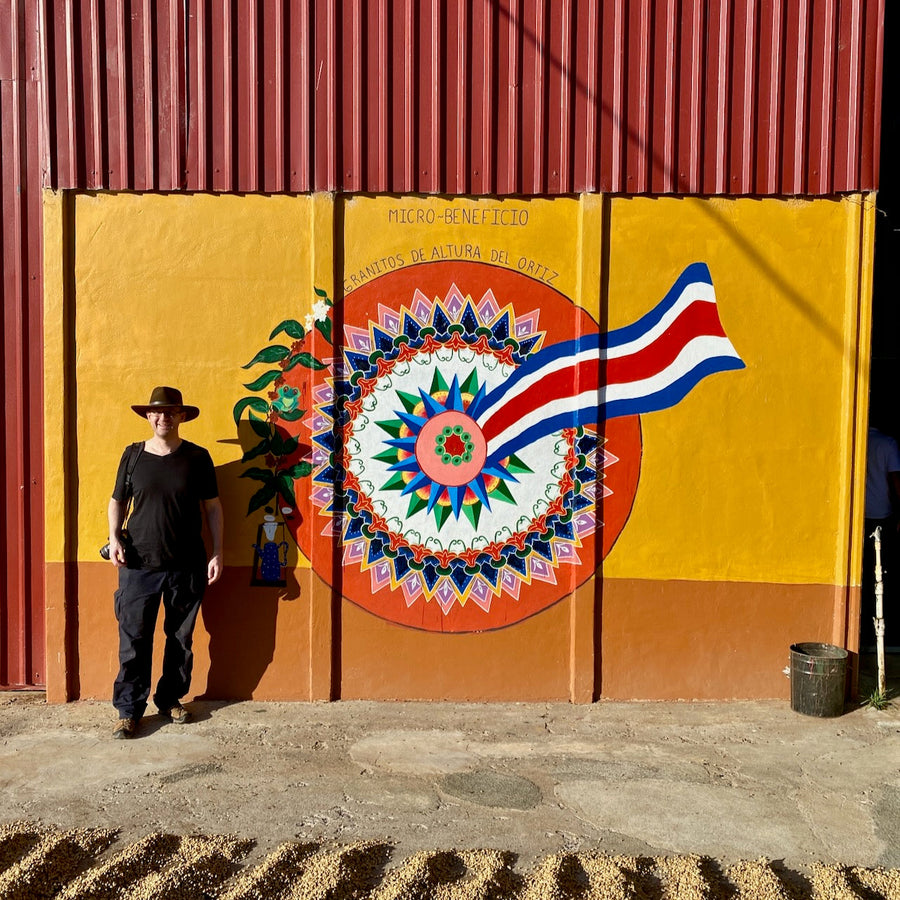
Sitting at 1,800 metres above sea level in Tarrazú you’ll find Granitos de Altura del Ortiz. The family-run micromill is managed by sisters Johana and Joyce Calderón, known for producing elegant, expressive coffees that reflect both the meticulous care that goes into growing and processing them and the exceptional terroir. The farm is a fine example of the characteristic cup profile gleaned from the cool mountain air and rich volcanic soils - ideal conditions for slow cherry maturation and more complex cup profiles.
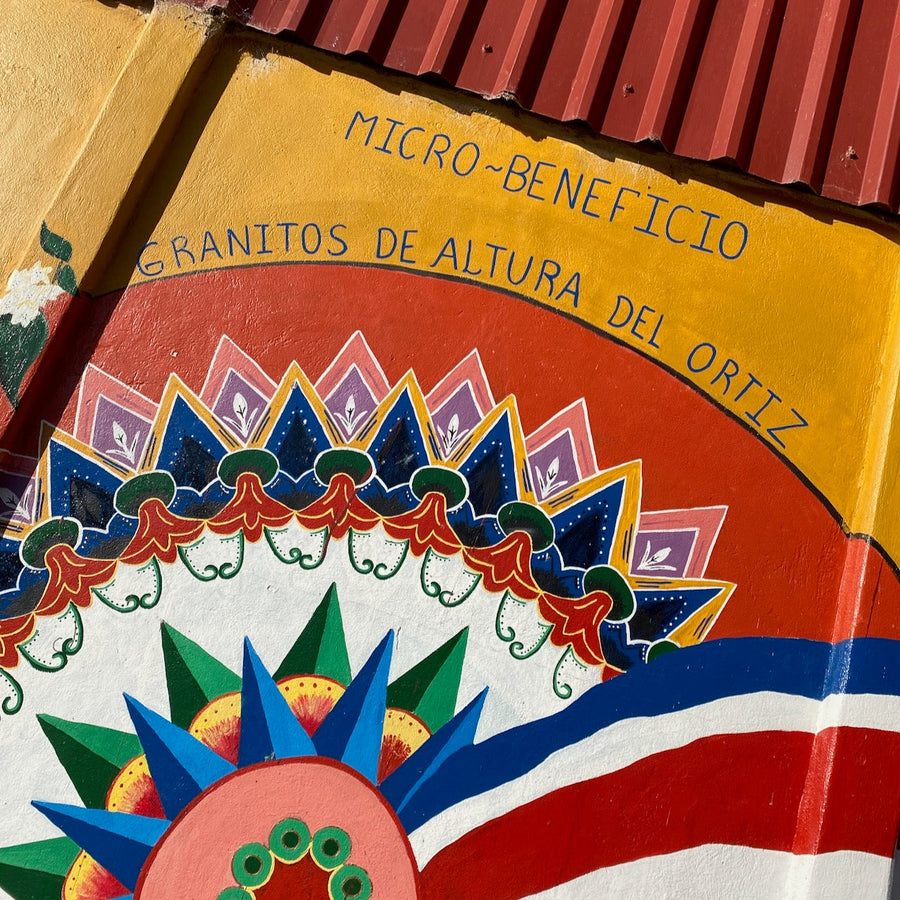
The name “Granitos de Altura” translates to “High Altitude Little Beans” - a nod to both the terrain and the fastidious care that defines their approach. This small but mighty operation is a shining example of Costa Rica’s micromill revolution.
Women in Coffee: Johana & Joyce Calderón
The mill was originally run by Joyce and Johana’s father, Omar Calderón, until they asked if they could take the reins. Since he said yes (of course!) just over a decade ago, the sisters have run the business with a deep commitment to quality over quantity. Omar still plays a vital role, managing the farms where the coffee is grown. Rather than expanding production, Joyce focuses on refining every step of the process - from cherry selection to drying - to ensure each lot meets their exacting standards.
The family’s philosophy is rooted in connection: with the land, with the coffee, and with the people who come to visit and share in the experience. “When the harvest is in full swing, the days are long and the workloads are heavy,” Joyce says. “But we’re energised by people visiting, sharing their time, and connecting over coffee.” Granitos de Altura is also part of a wider movement in Costa Rica: one that champions traceability, sustainability, and women-led coffee businesses. While we source this coffee through our long-standing export partner, Exclusive Coffees, the Calderón family’s commitment to quality and transparency is clear in every lot. Their work reflects a new generation of producers who are elevating Costa Rican coffee through innovation, care, and connection - and we’re proud to share their story and their coffee with you.
New Developments At Granitos
Roland’s last visit to Granitos was in 2024. The last couple of years have been relatively low harvests in Costa Rica, which meant that by the time he got to the farm in May the harvest was already finished. The visit was a little later than he would normally go, and with the lower quantity of coffee to be brought in the staff had already picked everything. At Granitos, as with a number of other farms we work with, this means that they have been using the spare days to take on some additional projects to improve the farm and mill whilst they have the time. This is a very positive sign as it shows that they’re earning enough from the normal years that, when they hit a tough year like this one, they don’t feel like they have to put a halt on any supplementary projects.
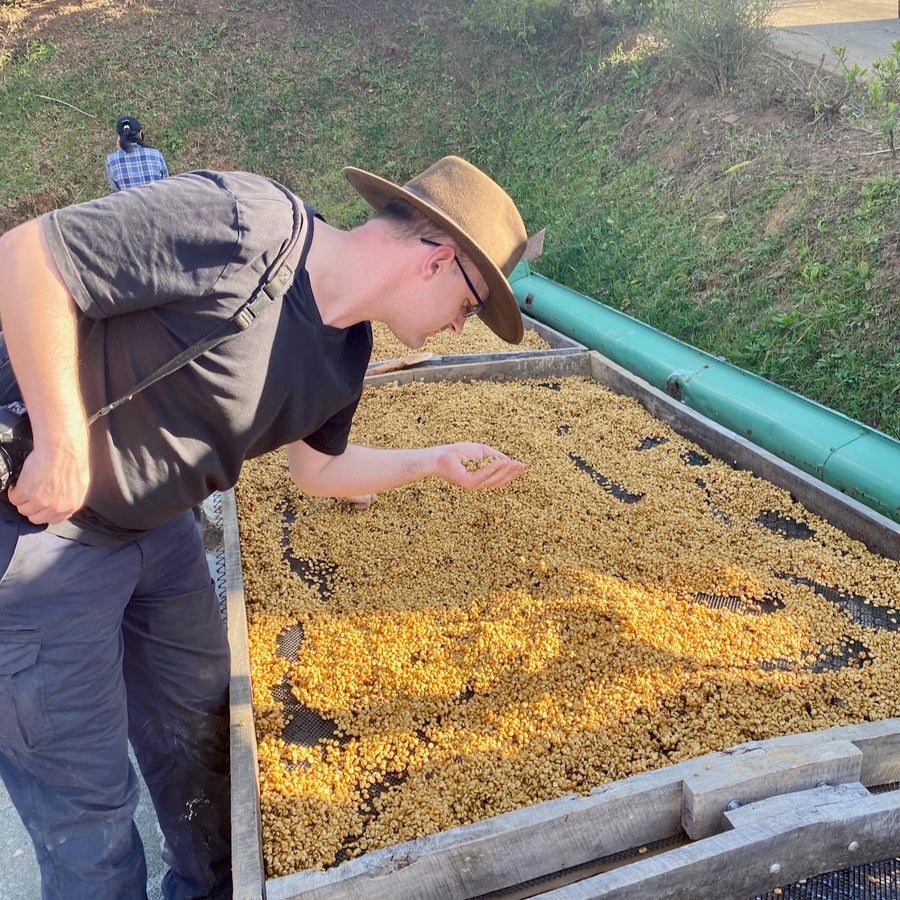
At the mill, this has resulted in some new drying tables and a colour sorter. The extra drying tables give Johana and Joyce the freedom to always choose the processing method that they think is right for the coffee on hand. The additional capacity means that they don’t need to worry about running out of space - the choice is based on flavour and quality rather than rigid practicality. The colour sorter is a machine that uses an electronic eye to spot damaged coffee beans and automatically separate them out before batches go on to Exclusive Coffees, our export partners.
Joyce and Johana have also begun a new side project they’re calling Dos Semillas (“Two Seeds” in English). This involves buying coffee cherries from other local farms to be processing at their mill themselves. This side project alongside the main work at Granitos is intended to help build up some extra funds with the goal of eventually buying their own farm. Omar has been very supportive of the plan and has even donated some Geisha seeds for them to plant there once they buy. Up until now, all of the Granitos farms are his, so this will be the first farm the sisters will have bought and owned independently.
They've also been working with Omar to plant some new varietals on the existing farm. They're not expanding the size of the estate, but they are trying out small plantings alongside the existing plant stock. These include Milenio, Starameyer, Catigua, and ParaisoI. These are newer Catimor varietals that are reported to have good cup quality. Roland noted having noticed particularly Starameyer and Milenio around on a few other farms he visited in the area. There are a number of farms trialling very small amounts of these to begin with - this will be an experiment to see if they actually hold up or not, only time will tell.
Honey Processing
We always love the Honey-process coffees we get from Granitos. As in previous years, this one stood out on the cupping table and was a must-buy.
For the Honey process you run the cherry through a special depulper that removes the skins while leaving the mucilage intact on the seeds. That layer of sticky fruit then stays on throughout the drying process on raised beds. The more mucilage left, the darker the colour goes during drying - this version keeps a small amount of pulp, hence “Yellow” Honey. That fruit contact means that in the final cup you get a little more fruit character and a little more body and texture than with a Washed coffee.
-
- Country: Costa Rica
- Region: Tarrazú
- Province: San José
- Town: Santa María de Dota
- Mill: Micro-Beneficio Granitos de Altura del Ortiz
- Producers: Calderón Family
- Farm: Ortiz 1800
- Growing altitude: 1,800 m.a.s.l.
- Soil type: Loamy
- Average annual rainfall: 2,050mm
- Plant age: Around 10 years
- Harvest months: January to February
- Variety: Catuai
- Processing method: Yellow honey
- Export partner: Exclusive Coffees
- Relationship since: 2022
-
Cupping notes: Peach, marzipan, sultana.
Cup of Excellence Cupping Scores
- Clean Cup: 6/8
- Sweetness: 6.5/8
- Acidity: 6/8
- Mouthfeel: 6/8
- Flavour: 6.5/8
- Aftertaste: 6.5/8
- Balance: 6.5/8
- Overall: 6.5/8
- Correction: +36
- Total: 86.5/100
If you'd like to find out more about how we score coffees, have a read of What Do Coffee Cupping Scores Actually Mean?, and if you fancy trying cupping yourself, we've got a guide to that too: What is Coffee Cupping.
-
Medium - keep this to the middle of the gap, slowing it a little to help develop the layered sweetness.
-
-
Producer Stories
Learn more about coffee sourcingJoyce, Johana & Omar Calderón
Micro-Beneficio Granitos de Altura del Ortiz has been managed and run for the last 10 years by two sisters, Joyce and Johana Calderón. Their father, Omar, manages five farms which provide coffee cherry to the mill.
Read more