



Costa Rica: Granitos de Altura del Ortiz, Typica Mejorado
Joyce, Johana & Omar Calderón
-
There's an immediate floral character here, delicate but expressive, sitting alongside an incredibly silky body. Lime zest and pink grapefruit bring plenty of freshness up front, balanced by a smooth cream-like sweetness through the middle of the cup. It all comes together in a lingering raspberry finish that's subtle, elegant and wonderfully well balanced.
The name "Granitos de Altura" translates to "High Altitude Little Beans", a nod to both the terrain and the fastidious care that defines their approach. This small but mighty operation is a shining example of Costa Rica’s micromill revolution. We've loved the Honey Process Catuai coffees we've had from Granitos, so this year we asked if they had any other varietals available for something a bit different. They recommended trying a couple of options, and this Typica Mejorado stood out on the cupping table.
World-Famous Tarrazú
The Tarrazú coffee region sits halfway down Costa Rica towards the western coast. The region is made up of the Dota, San Marcos (Tarrazú), and León Cortés cantons, threaded through by beautiful mountains that form part of the Talamanca Sierra. It is famous for producing some of the very best coffee in the country, with coffee production being the main industry for local residents of the Tarrazú canton, making up a whopping 95% of the local economy.
During the harvest in December, January, and February, the area’s population triples with seasonal workers needed to bring in the crop.
The mountain landscape provides perfect conditions for the production of high-quality specialty coffee. The plants thrive in fertile volcanic soils at an ideal average temperature of just under 20°C, with the steep slopes providing the right balance of high altitude for slow cherry maturation and shelter for delicate Arabica coffee trees. Tarrazú coffees are prized for their bright acidity, floral aromatics, and clean, sweet profiles.
The Calderón Family
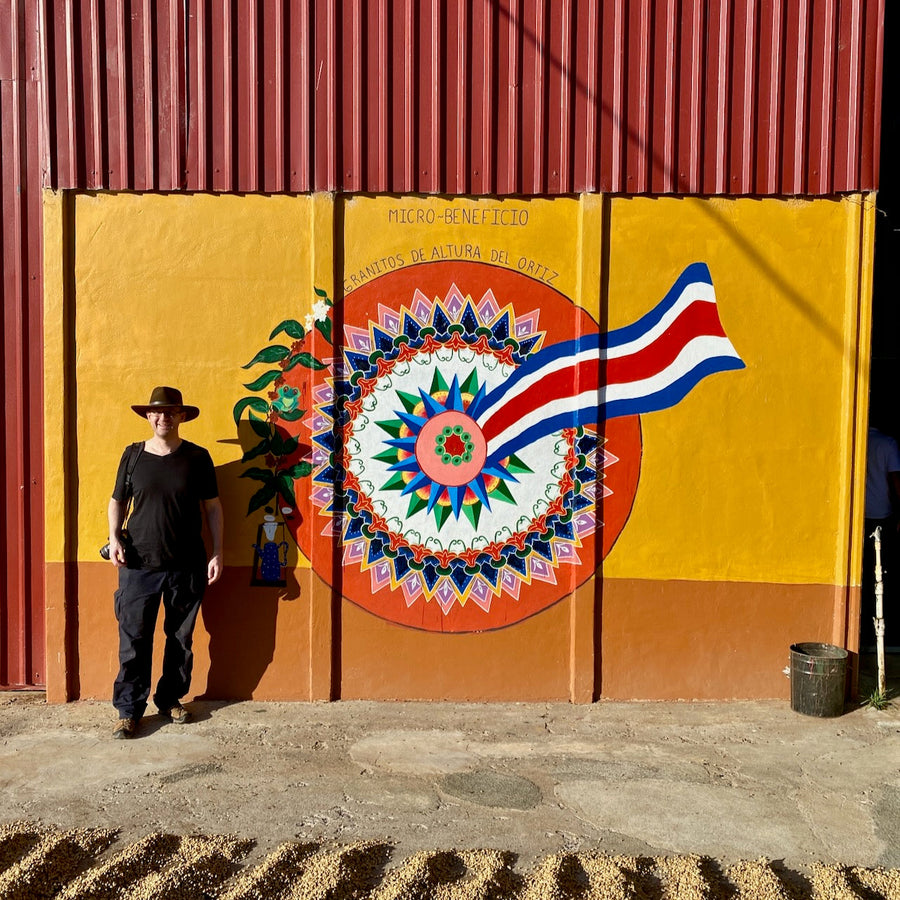
Sitting at 1,800 to 2,000 metres above sea level in Tarrazú, you’ll find Granitos de Altura del Ortiz. The family-run micromill is managed by sisters Johana and Joyce Calderón, known for producing elegant, expressive Costa Rican coffees that reflect both the meticulous care that goes into growing and processing them and the exceptional local terroir.
The farm is a fine example of the characteristic cup profile gleaned from the cool mountain air and rich volcanic soils, ideal conditions for slow cherry maturation and more complex flavour development.
The mill was originally run by Joyce and Johana’s father, Omar Calderón, until they asked if they could take the reins. Since he said yes, just over a decade ago, the sisters have run the business with a deep commitment to quality over quantity. Omar still plays a vital role, managing the farms where the coffee is grown.
Rather than expanding production, Joyce focuses on refining every step of the process, from cherry selection to drying, to ensure each lot meets their exacting standards.
The family’s philosophy is rooted in connection: with the land, with the coffee, and with the people who come to visit and share in the experience.
“When the harvest is in full swing, the days are long and the workloads are heavy,” Joyce says. “But we’re energised by people visiting, sharing their time, and connecting over coffee.”
Granitos de Altura is also part of a wider movement in Costa Rica that champions traceability, sustainability, and women-led coffee businesses. While we source this coffee through our long-standing export partner, Exclusive Coffees, the Calderón family’s commitment to quality and transparency is clear in every lot. Their work reflects a new generation of producers who are elevating Costa Rican coffee through innovation, care, and connection, and we’re proud to share both their story and their coffee with you.
New Developments
Roland’s last visit to Granitos was in 2024. The last couple of years have been relatively low-harvest years in Costa Rica, which meant that by the time he reached the farm in May, the harvest had already finished. The visit was a little later than normal, and with lower coffee volumes to be brought in, the staff had already completed picking.
At Granitos, as with a number of other farms we work with, this meant they were able to use spare time to take on additional projects to improve both the farm and mill. This is a very positive sign, showing that they’re earning enough in stronger years that they don't have to halt improvement projects during more challenging seasons.
At the mill, this has resulted in new drying tables and a colour sorter. The extra drying tables give Johana and Joyce the flexibility to choose the processing method they feel best suits the coffee rather than being limited by capacity. The colour sorter uses an electronic eye to identify damaged coffee beans and automatically remove them before lots are sent to Exclusive Coffees, our export partner.
Joyce and Johana have also begun a new side project called Dos Semillas ("Two Seeds" in English). This involves purchasing coffee cherries from nearby farms and processing them at their own mill.
The project is intended to generate additional income with the long-term goal of purchasing their own coffee farm. Omar has been highly supportive and has even donated some Geisha seeds for them to plant once they acquire the land. Until now, all the Granitos farms have been owned by him, so this will become the first independent coffee farm the sisters own themselves.
They've also been working with Omar to plant a number of new varietals on the existing farms. While they're not expanding the size of the estate, they are trialling small plantings alongside existing stock. These include Milenio, Starmaya, Catigua, and Paraiso I.
These newer Catimor-derived varietals are reported to have excellent cup quality. Roland noticed both Starmaya and Milenio appearing on several other farms he visited in the region. For now, these remain small experiments, and only time will tell how successful they prove to be.
What Is Typica Mejorado?
The lot we have for you today is Typica Mejorado. The newer varietals are still only seedlings, but Mejorado is already well established and producing consistently good harvests.
Mejorado translates as "improved" in Spanish, making this essentially an "improved Typica". The name emerged from producers observing coffee plants that resembled Typica but delivered notably better performance and cup quality. Typica and Bourbon were among the first coffee varietals to spread from Ethiopia, and the majority of modern coffee varieties can trace their lineage back to one of these foundational cultivars.
Typica Mejorado was originally thought to be a selection of Typica that retained the morphology of a Typica plant while offering stronger disease resistance and greater productivity. Genetic testing has since revealed that it is actually a Bourbon-Ethiopian hybrid.
So, to the best of our knowledge, this is a hybrid of Bourbon and an unknown Ethiopian accession that shares the appearance and flavour profile of excellent Typica lots while being genetically distinct.
In the cup, it does deliver that classic Typica character. If you're unfamiliar, it shares some similarities with Java or Geisha, although in a more subtle form. It typically presents elegant florals, a delicate and clean profile, a silky body, and complex fruit character
This is not a varietal you encounter very often, making it particularly unusual and exciting to find in Costa Rica.
What Is Black Honey Processing?
Joyce and Johana processed this lot using the Black Honey process, which we think was a really interesting choice. We don't see as much Black Honey coffee today as we did five years ago, as it is less fashionable within the industry than it once was.
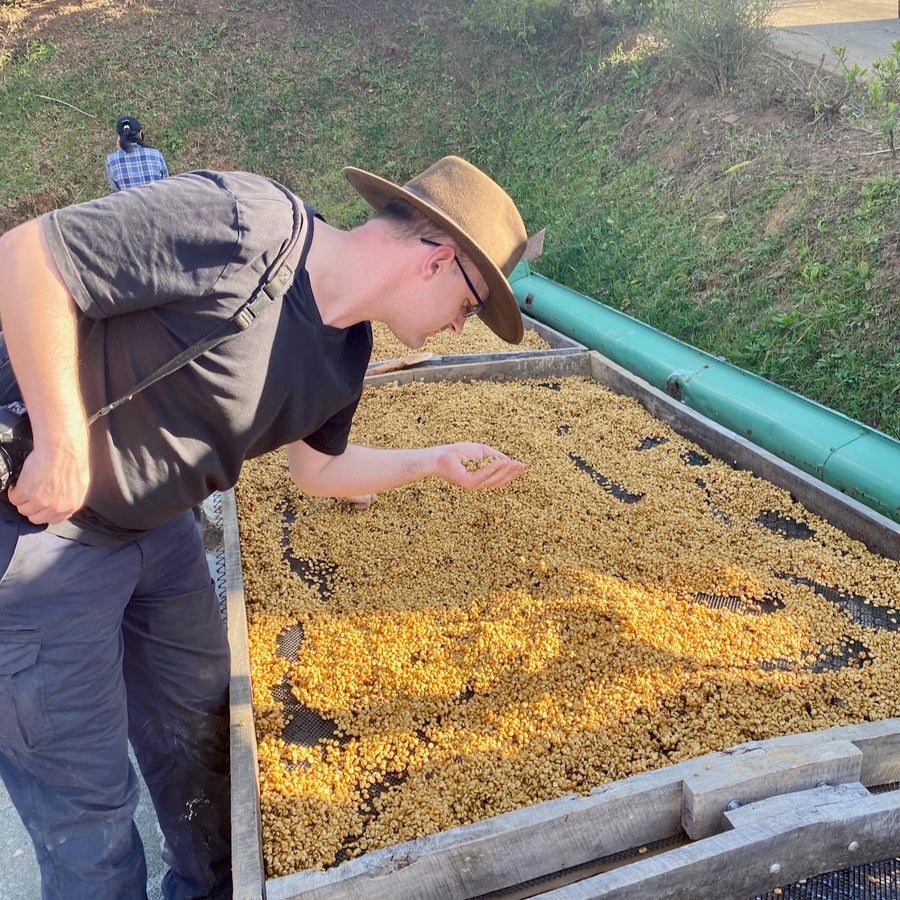
For Honey processing, coffee cherries are passed through a specialised depulper that removes the skin while leaving the sticky fruit mucilage attached to the seed. This fruit layer remains throughout the drying process on raised beds.
The greater the amount of mucilage retained, the darker the coffee becomes during drying. In Black Honey processing, the maximum amount of mucilage is left on the coffee, which is where the name comes from.
This increased fruit contact gives the finished coffee more fruit character, body, and texture than lighter Honey styles such as Yellow Honey, which are now more commonly seen.
For us, this coffee strikes a Goldilocks balance. You get the complexity and elegance of the Typica Mejorado varietal, supported by a little extra body and texture from the processing method.
As always, we tasted this lot blind alongside many others and simply thought it was delicious. Roland had discussed the coffee with Johana and Joyce before it was produced and was delighted when it appeared on the cupping table. It absolutely lived up to his hopes.
-
- Country: Costa Rica
- Region: Tarrazú
- Province: San Jose
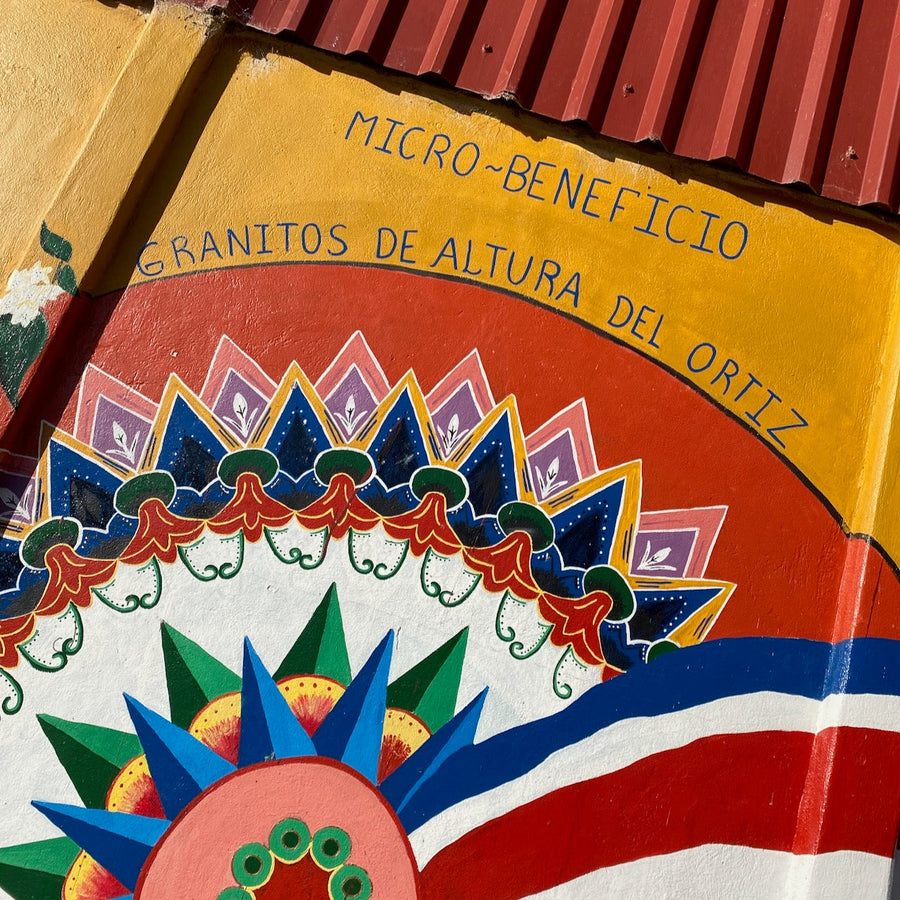
- Mill: Micro-Beneficio Granitos de Altura del Ortiz
- Producers: The Calderón Family
- Elevation: 1,700-2,000 m.a.s.l.
- Varietal: Typica Mejorado
- Processing system: Black Honey
- GPS: 9.651761, - 83.943631
-
Cupping Notes: Lime zest, pink grapefruit, raspberry.
Cup of Excellence Cupping Scores
- Clean cup: 6.5/8
- Sweetness: 6/8
- Acidity: 6.5/8
- Mouthfeel 6.5/8
- Flavour: 7/8
- Aftertaste: 6.5/8
- Balance: 8/8
- Overall: 7/8
- Correction: +36
- Total: 90/100
-
Medium - keep this to the middle of the gap, no more! It's easy to push this too far and lose the complexity of the cup.
Recommended Resting Time
Our coffee is roasted fresh and ships quickly – which means it might arrive a little lively. Freshly roasted beans are still busy releasing carbon dioxide (a natural byproduct of roasting), and all that activity can make your brew taste a bit sharp or unsettled.
Give it a few days to calm down and something lovely happens. Those brighter, edgier notes mellow out, sweetness develops, and the flavours you're actually after can really come into focus.
We recommend resting your coffee for at least 5-7 days from the roast date on the bag before brewing. A little patience goes a long way.
That said, this is just what we've found works best – not a rule. If you can't wait, we completely understand. Tuck in whenever you like.
-
-
Producer Stories
Learn more about coffee sourcingJoyce, Johana & Omar Calderón
Micro-Beneficio Granitos de Altura del Ortiz has been managed and run for the last 10 years by two sisters, Joyce and Johana Calderón. Their father, Omar, manages five farms which provide coffee cherry to the mill.
Read more